


- Share an intimate dinner in the cool mountain air
- Discover the Cordillera through a cuisine of fire and passed-down know-how
- Feel what smoke, salt and time bring to flavours
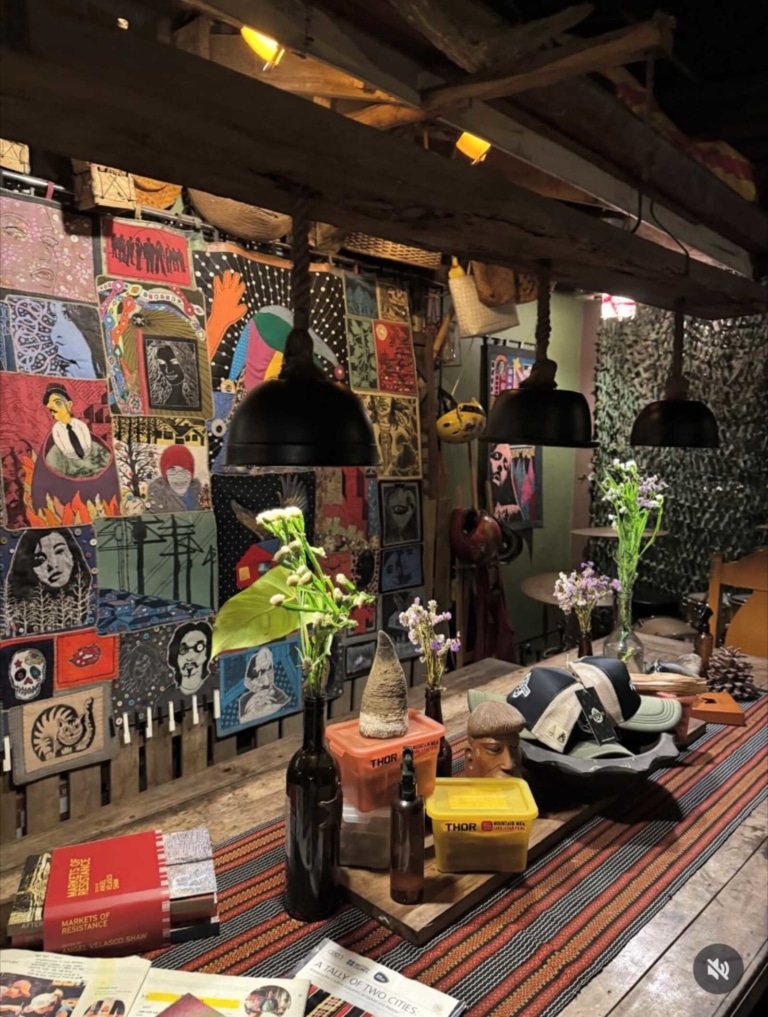
- Step into a discreet, attentive hospitality, without staging
- Make Baguio a first breather before the mountains of the North
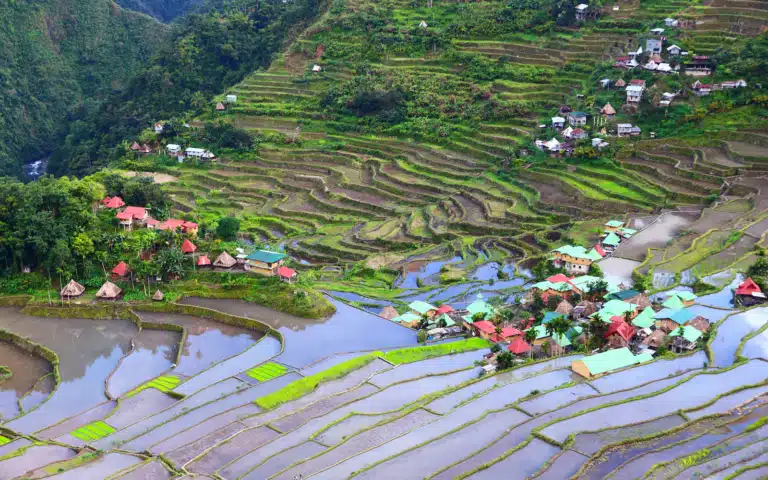
A first immersion in the Northern mountains
A stopover that already ushers you into the Cordillera
Baguio is not only a convenient stop before heading further into the mountains of the North. The city already lets you feel some of the contrasts that define the Cordillera: a cooler climate, a more restrained atmosphere, a different relationship to daily rhythm and to hospitality.
This first immersion remains discreet yet noticeable. Here, the mountain expresses itself less through grand gestures than through an overall ambiance, a way of inhabiting space and sharing time. The meal fits fully into this continuity. It gently supports the transition toward another face of the Philippines, more rooted in rugged terrain and highland regions.
The experience is particularly well suited to travelers looking for human-scale moments. Dinner leaves room for conversation, listening, and observation. This simplicity greatly contributes to the quality of the moment. It also creates a natural transition between the beginning of the trip and the gradual discovery of the Northern highlands.
On this first evening in Baguio, it’s not only about eating well. It’s also about beginning to sense what the Cordillera imprints on lifestyles, flavors, and ways of welcoming. That is what gives this stopover its special place in an itinerary toward the Philippine North.
A cuisine shaped by fire, smoke, and time
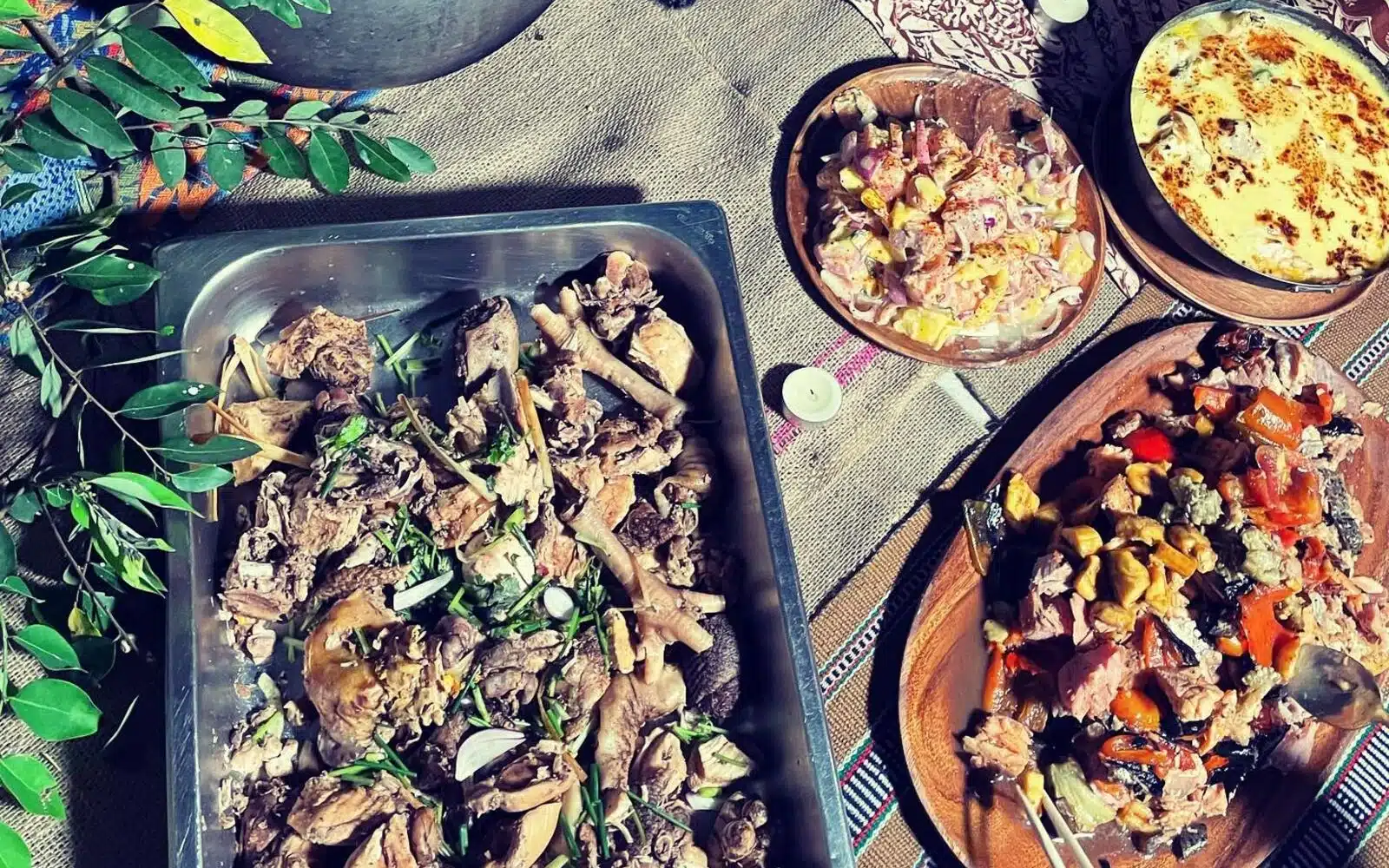
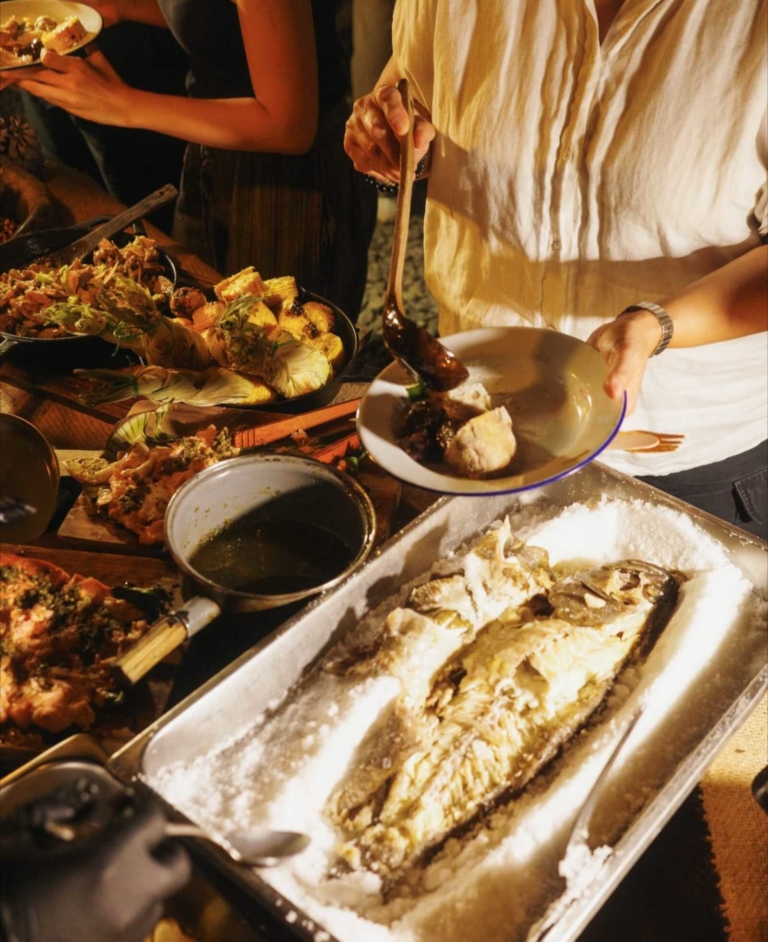
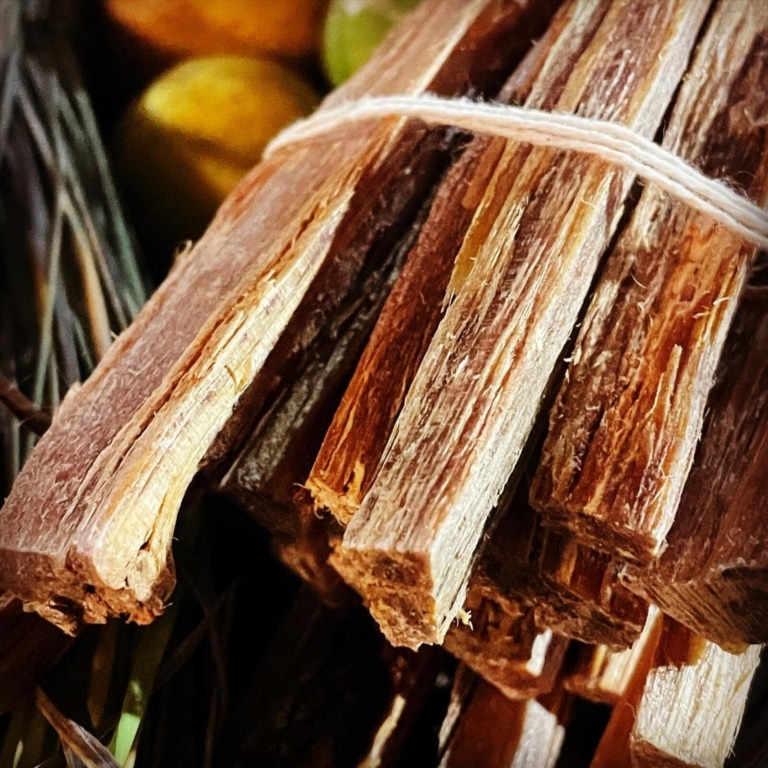
As the meal unfolds, the flavors also tell something about the land. Fire, smoke, salt, and time take a central place in this cuisine, shaped by the constraints and resources of the mountains.
These elements are not a stylistic effect. They refer to cooking, preservation, and processing practices deeply tied to the relief and climate of the Cordillera. The cuisine presented here retains that memory through a sober, precise approach, without folklore or excessive staging.
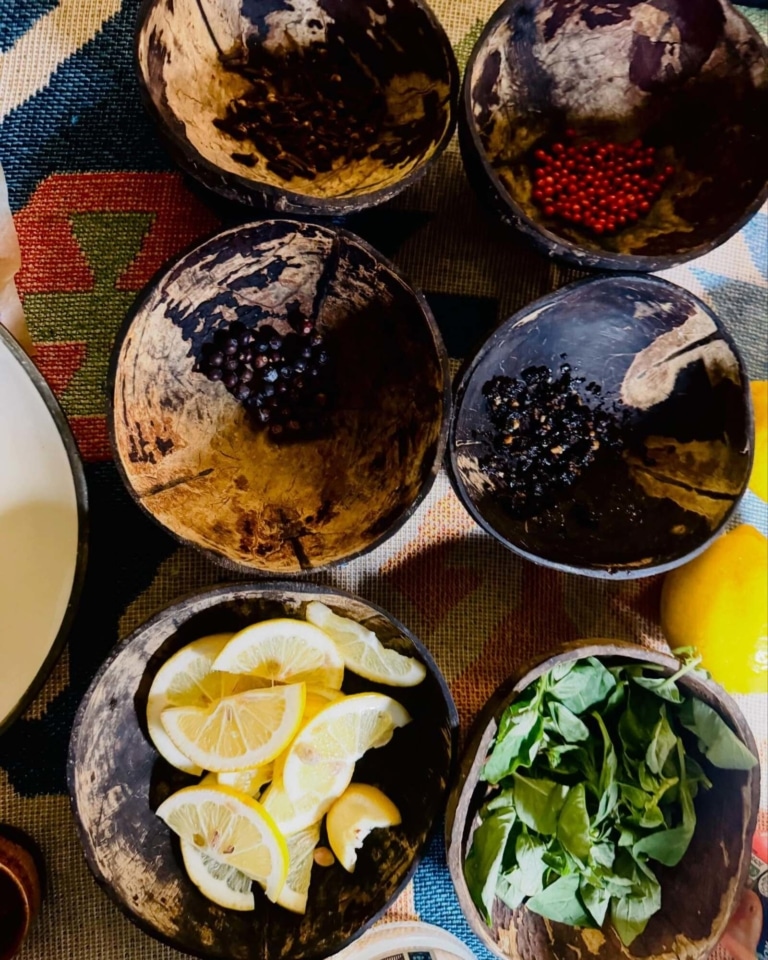
On the plate, the contrasts remain clear yet controlled. Smoky notes, certain more saline intensities, or the depth of the cooking come together in a cuisine with character, directly linked to its environment. What stands out most is the overall coherence. Nothing seems artificially crafted to impress. Each preparation appears to naturally extend a longstanding relationship with the land and its resources.
This approach gives the meal a genuine cultural dimension. Through flavors, textures, and cooking methods, the dinner already offers a way to approach another reading of the Philippines—more mountainous, more understated, and deeply anchored in the everyday life of the highlands.
An intimate and deeply human experience
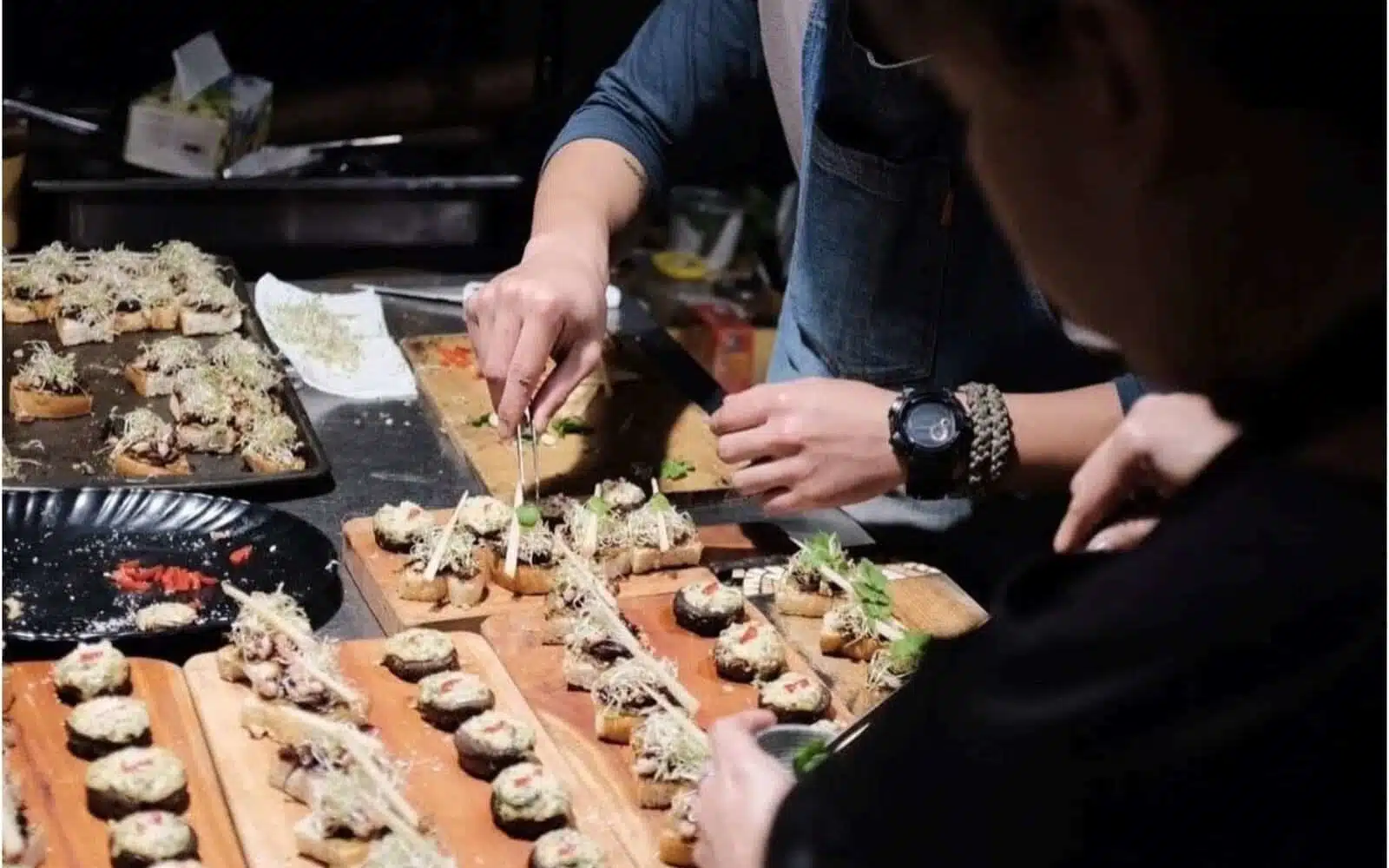
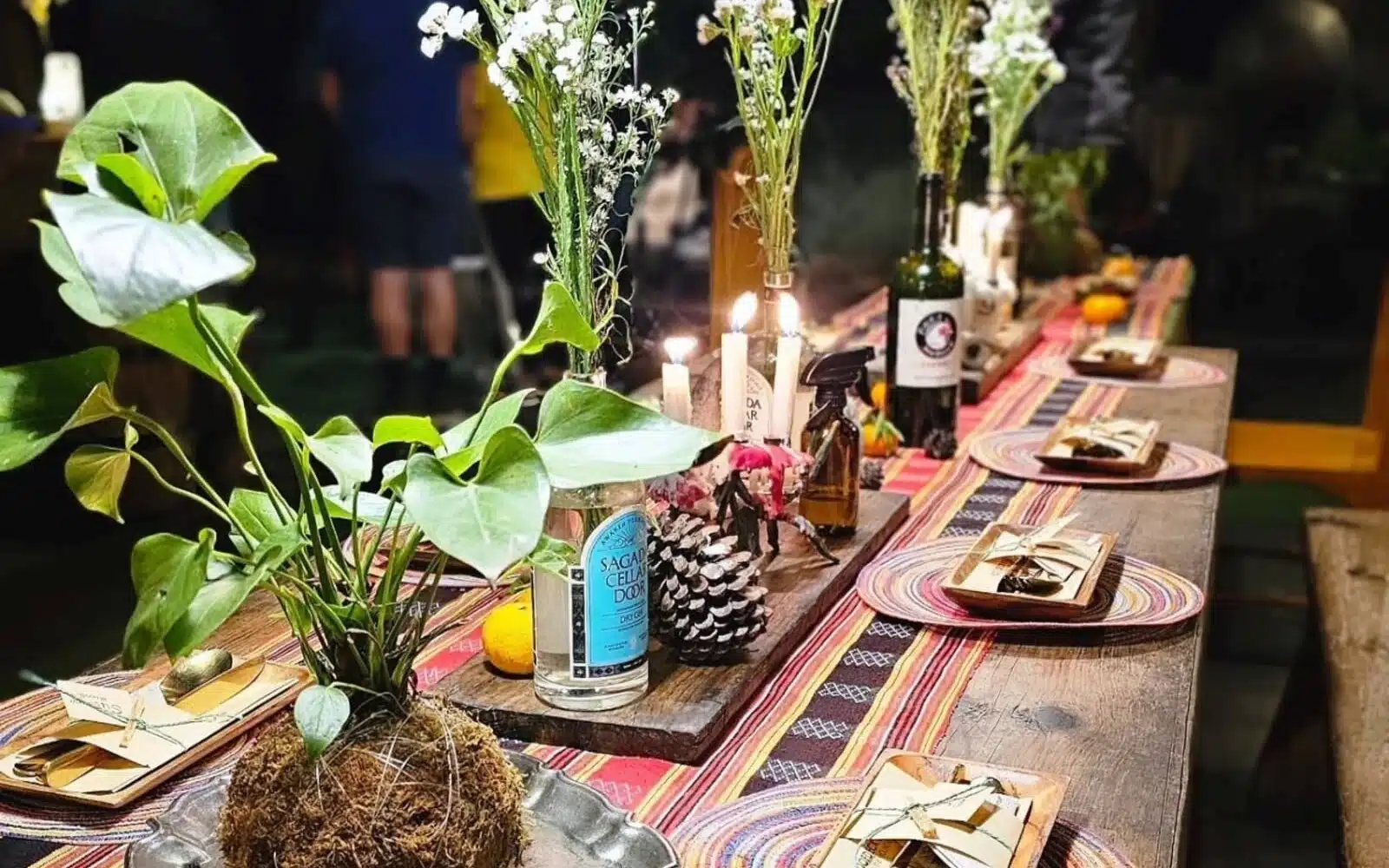
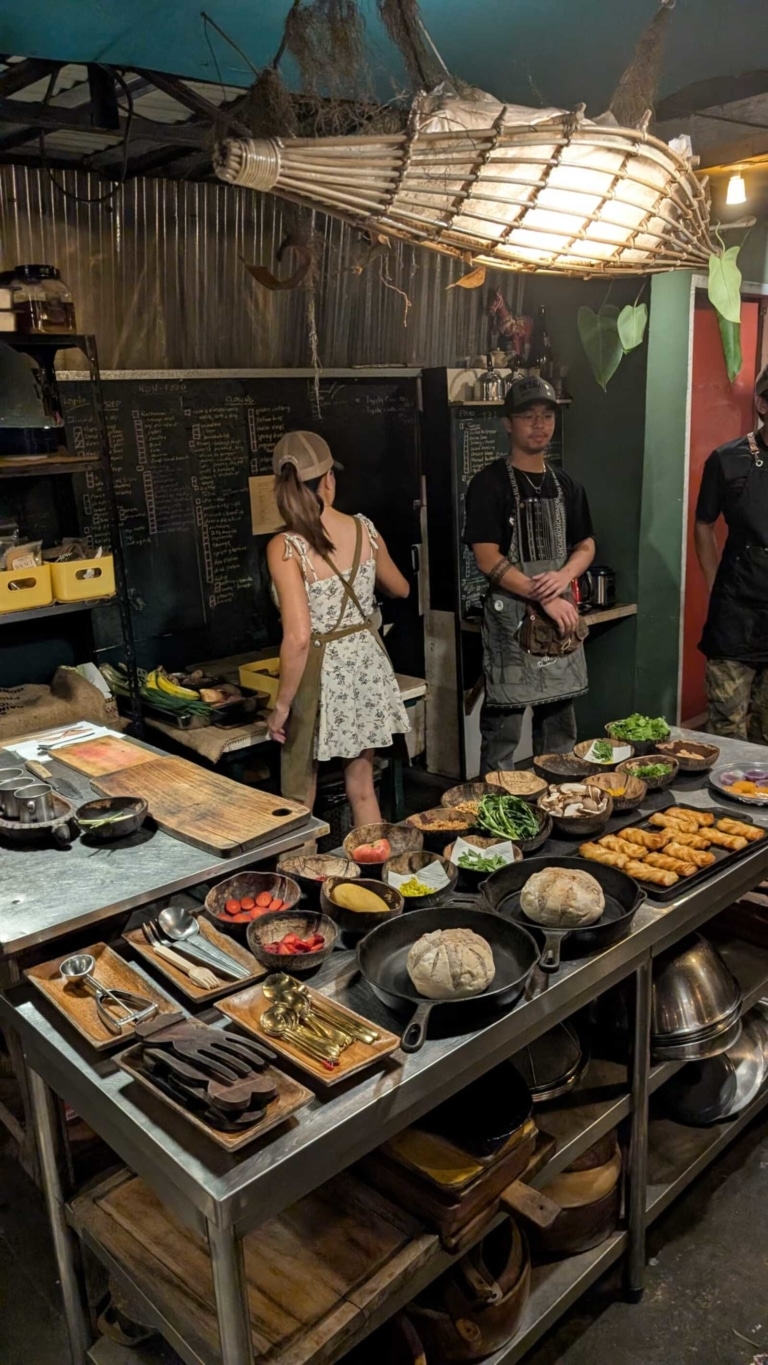
The uniqueness of this experience also lies in the way it welcomes guests. Here, the care given to diners is not expressed through decorum, but through the quality of attention paid to the moment shared. The setting remains deliberately intimate, almost soothing, in keeping with the spirit of the place.
The pace of the dinner greatly contributes to this feeling. Nothing seems rushed. The meal unfolds naturally, giving everyone time to fully enjoy the atmosphere and the exchanges. This restraint creates an especially pleasant experience for travelers who favor genuine encounters and human-scale addresses.
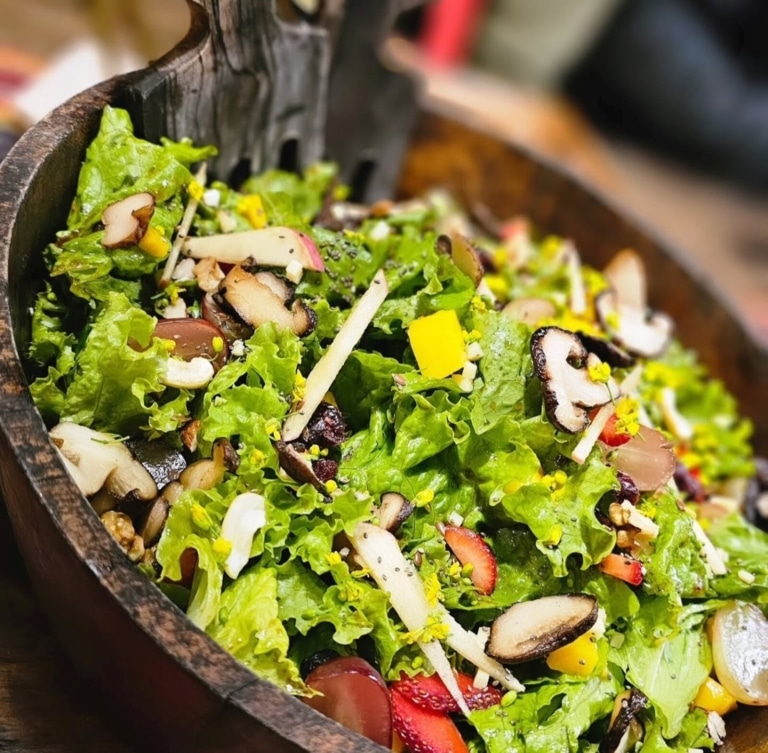
This attentiveness also extends to the way different traveler profiles are welcomed. Vegetarian guests or those with specific dietary habits can be accommodated under good conditions when they indicate it in advance. Here again, the approach remains simple, smooth, and attentive, without unnecessary rigidity.
On a trip to the Philippines, this evening thus naturally finds its place as a first gateway to the Cordillera. Not as an isolated interlude, but as an experience consistent with the spirit of the journey: slower, more human, and deeply connected to the regions crossed.



 Français
 English