



- Discover an amphitheatre of rice terraces shaped over nearly two millennia.
- Step into a living cultural landscape, still inhabited and cultivated.
- Feel the strength of an ancestral heritage born of collective work.
- Approach the mountain on foot, at the right pace for this land.
- Read in the slopes, the water, and the villages all the intelligence of the highlands.
Another depth of the Philippines
In the mountains of the northern Philippines, some discoveries don’t reveal themselves right away. Here, the experience begins long before the first rice terraces come into view, as the road gradually fades away and walking takes over. The terrain becomes more pronounced, the silence deeper, and your gaze slowly learns to slow down, imagined by our authentic travel agency.
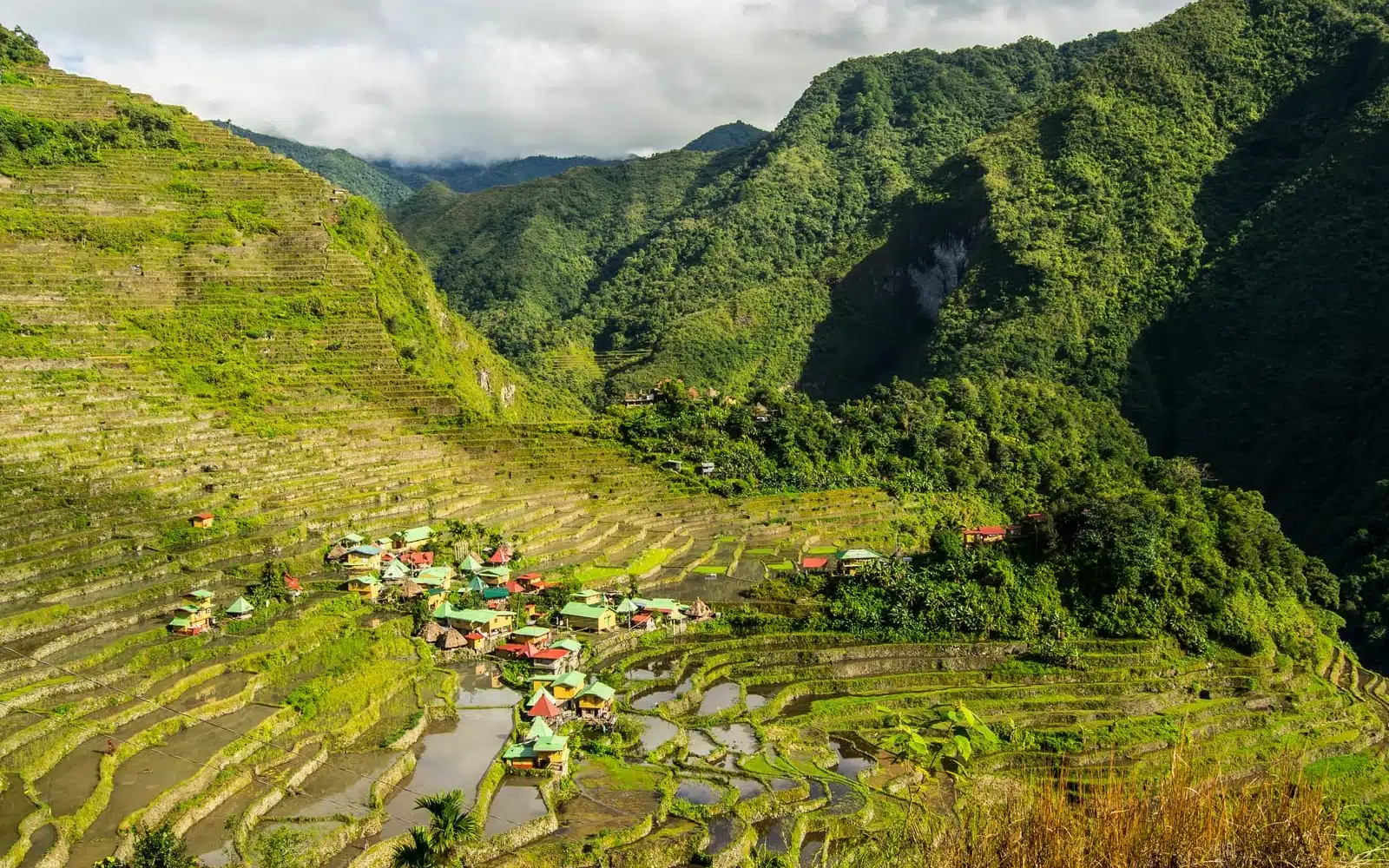
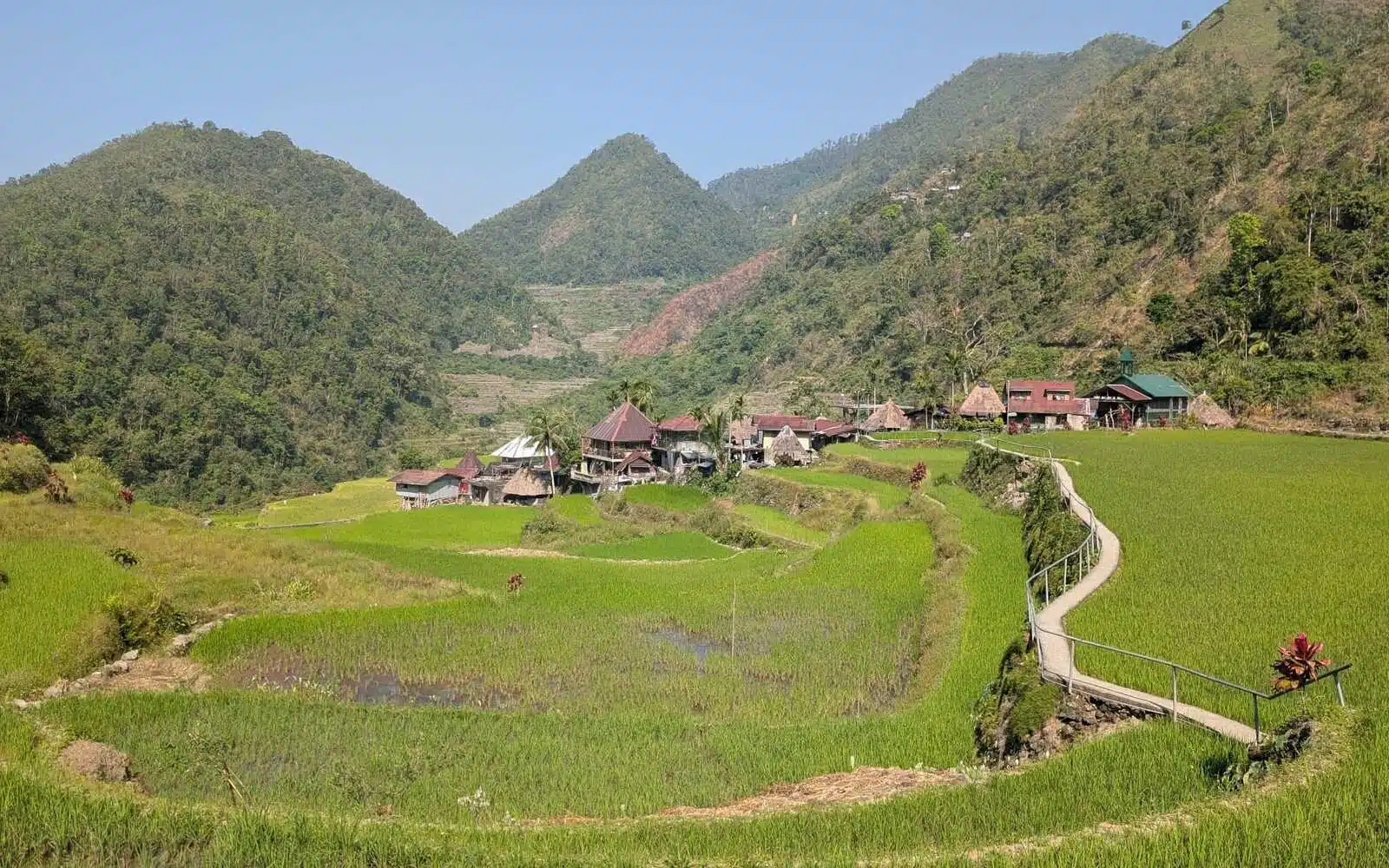
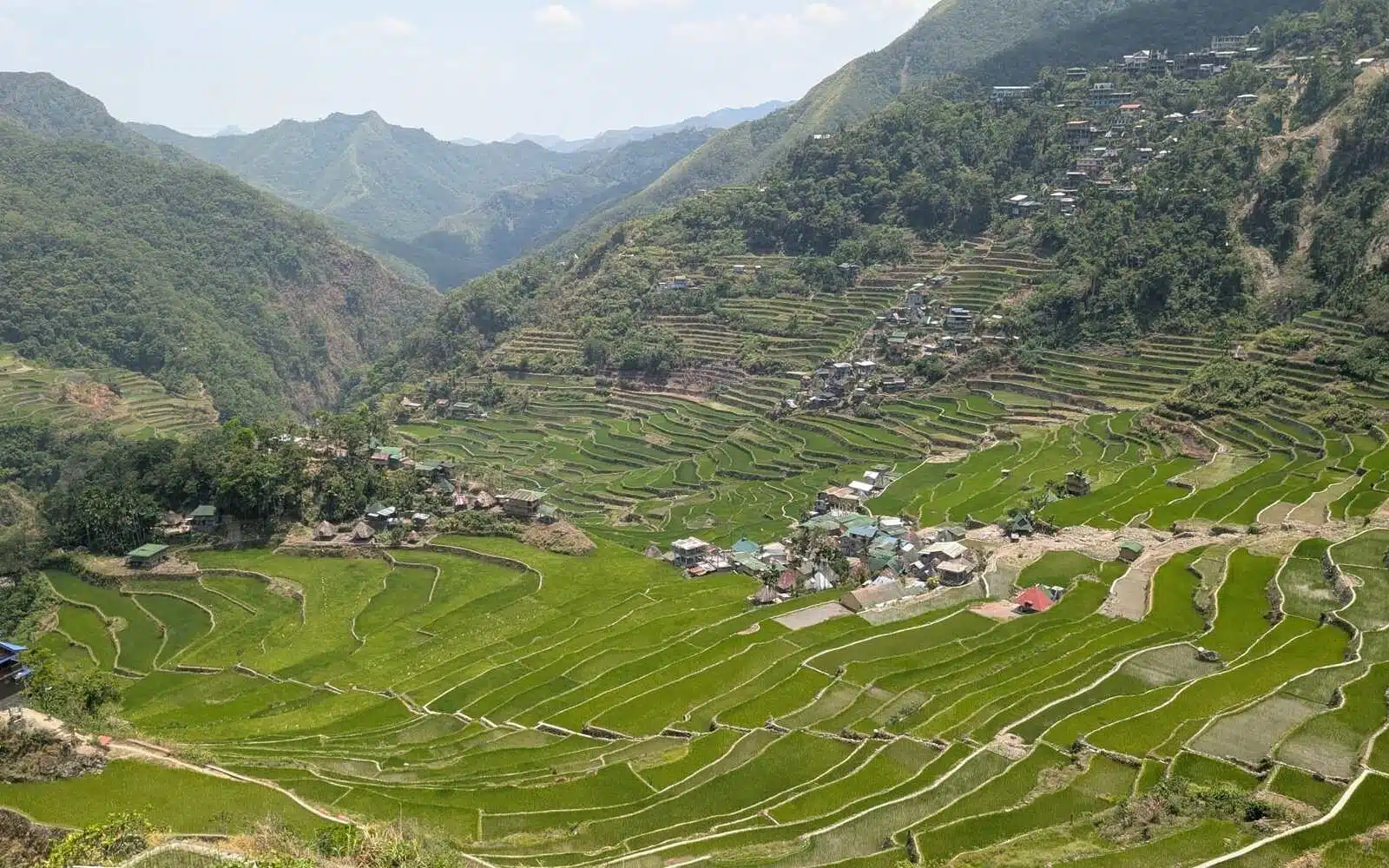
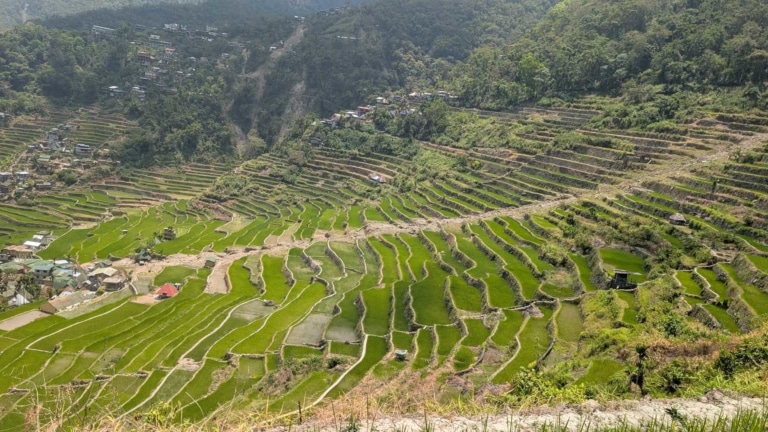
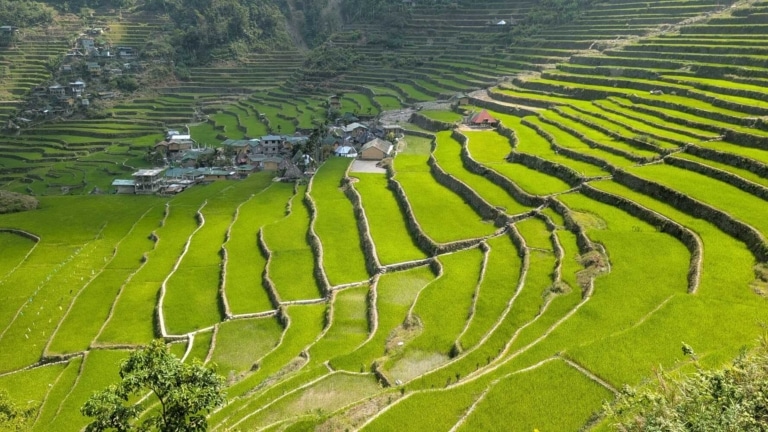
Then the mountain suddenly opens onto one of the most spectacular landscapes in the archipelago: a vast ensemble of terraces carved into the slopes, forming in places a wide semi-circular amphitheatre at the foot of which a village clings. But the power of the place goes far beyond the beauty of the view. What stands out here is the rare balance between the mountain, the water, the dwellings and human labour, during a trip to the Philippines.
Shaped for nearly two thousand years by the Ifugao communities, these rice terraces tell a different story of the Philippines: more mountainous, more rooted in the land, more deeply tied to the memory of these places and to know-how passed down through generations.
A landscape shaped by the mountain
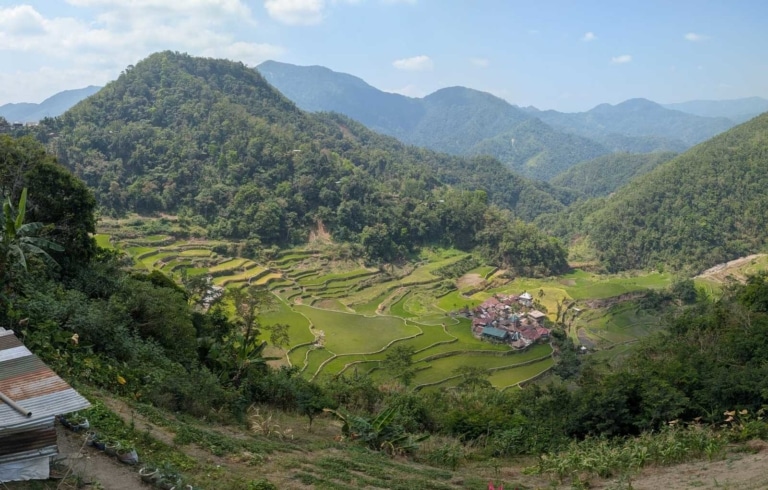
The impression you get when facing the rice terraces comes first and foremost from their relationship with the terrain. Nothing here seems imposed on the mountain. The terraces follow the natural curves of the slopes, hug the lines of the land, and create a remarkably coherent visual whole.
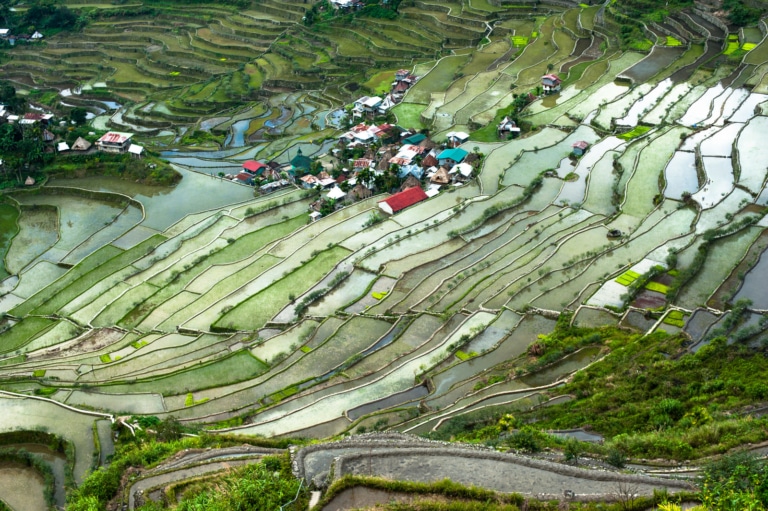
In the most impressive sites, the rice terraces form a vast green amphitheatre whose tiers seem to stretch as far as the eye can see. The village set at its base heightens this sense of balance between human settlement and the natural environment. The beauty of the place lies as much in its scale as in this subtle harmony between the different elements of the landscape.
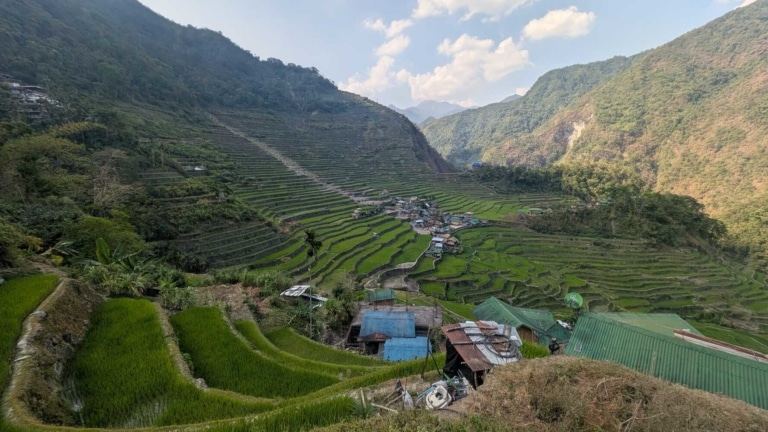
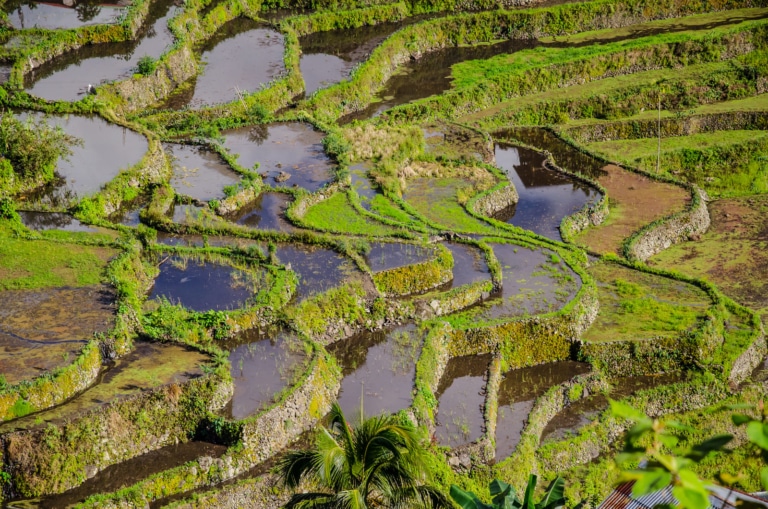
As your gaze moves across it, more delicate details also appear: the patient lines of the plots, the stone or earthen walls that support the terraces, the variations in texture from one level of cultivation to another, and the flow of water running through the slopes. The spectacular is immediate, but it gradually gives way to something deeper: the understanding of a territory designed entirely with the mountain rather than against it.
A living, inhabited heritage
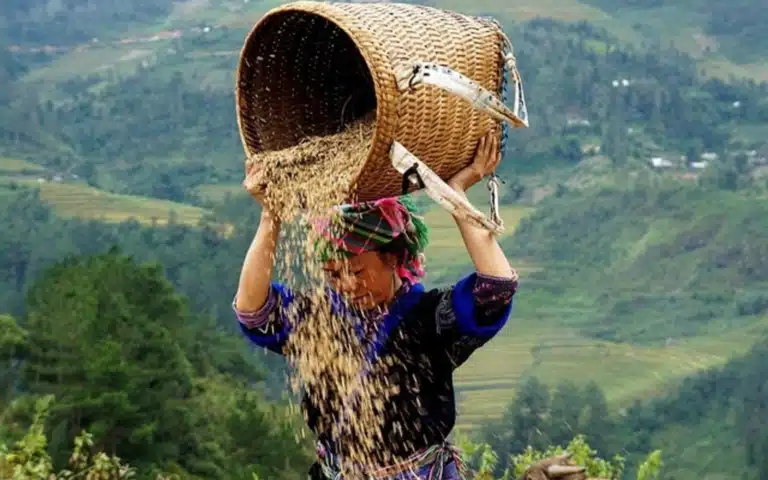
What gives the place its full power is that it is not a landscape frozen for visitors. Even today, the rice terraces remain a lived-in, cultivated, inhabited territory, where agricultural practices continue to shape daily life and the relationship to the land.
Everywhere, the terraces bear witness to the long arc of time. The irrigation systems, the levels carved into the slope, and the organization of the territory tell a story of centuries of transmission and adaptation. Nothing feels like a backdrop designed solely to be admired. On the contrary, every element seems to carry the mark of patient, continuous use.
This human presence profoundly changes how the site is perceived. You are not only contemplating a landscape or architectural feat, but an age-old balance between cultivation, settlement, and environment. The high-altitude forests, essential for supplying water to the rice terraces, also contribute to this overall coherence.
It is precisely this living dimension that makes the experience so distinctive. Your eye no longer stops only at the beauty of the panorama: it gradually lingers on what it reveals about a mountain society, its know-how, and its way of inhabiting the land.
An experience you have to earn
Access to the rice terraces is an integral part of the experience. Here, discovery is not limited to a simple panoramic stop. Walking is necessary, sometimes demanding, and it imposes a slower pace that gradually transforms your relationship with the landscape.
This gradual approach gives the place a special density. As you move along the trails, your eye learns to observe differently: the way water flows from one terrace to the next, the variations in the terrain, the village’s place on the slope, and the precision with which the mountains have been shaped.
The terrain requires attention and strong legs, but this physical commitment directly adds to the value of the experience. Because you arrive slowly, the landscape never becomes an image consumed too quickly. It reveals itself in stages, through movement and effort.
This immersion ultimately offers another way of travelling in the Philippines. Far from the best-known tropical clichés, this region invites you to slow down, embrace a certain simplicity, and enter into a more tangible relationship with the land. In return, it leaves a rare impression: that of having come close not to a standalone monument, but to a world still deeply attuned to its environment.

 Français
 English