


- The gentleness of the landscapes.
- Nights in a stilt house.
- Peaceful cruising between lakes, river and waterfall.
- The unspoilt atmosphere of the national park.
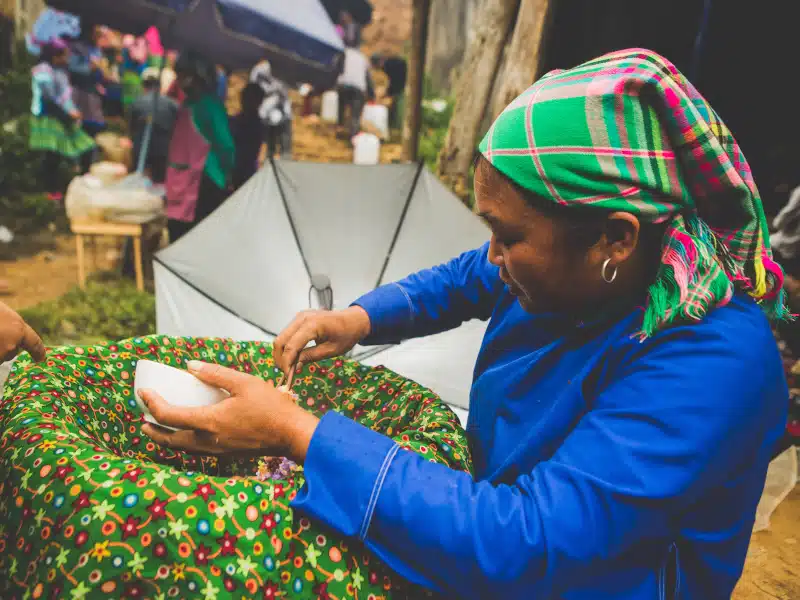
- The simple moments shared with the locals.
Three days at a slow pace in northern Vietnam
North of Hanoi, the Ba Be region feels like a world of its own, far from the main tourist routes and the most popular circuits. As soon as you leave the capital, the road gradually leads into a more rural Vietnam, where the landscapes seem to open up and grow quieter as the hours go by. The terrain becomes more prominent, the villages more spread out, and the whole gives the impression of a world organised around nature rather than speed, imagined by our authentic travel agency.
Ba Be reveals itself like a breath of fresh air. The lakes, the forest, the mountains and the Tay villages form a harmonious whole, where water holds a central place. Here, the journey is not about multiplying stops, but about settling into a gentler pace, guided by simple travel and encounters, during a trip to Vietnam.
From Hanoi to the first landscapes of Ba Be
Departing from Hanoi marks a gradual transition. Very quickly, the buildings give way to roads lined with vegetation, cultivated fields, and scenes of everyday rural life. The journey becomes an experience in itself, shaped by glimpses of landscapes that slowly change in density and color.
A break in a local restaurant further anchors this entry into the north of the country. Here you’ll find simple cuisine, served without pretension, naturally accompanying the road toward the mountains of Bac Kan.
Arriving in a Tay village in the heart of Ba Be National Park introduces a new sense of time. Settling into a traditional stilt house comes with an immediate feeling of calm.
A first walk offers a sense of the surroundings. The paths open onto areas of dense vegetation, bodies of water, and wider views over the park. When conditions allow, a swim in the lake provides a first direct immersion in this aquatic landscape.
Later, a bike or motorbike outing makes it possible to reach a nearby cave. The route crosses peaceful countryside, where scenes of life follow one another without staging: locals at work, children playing near the houses, animals roaming freely. The day ends with a dinner shared with the locals, in a simple atmosphere, before a night in the stilt house.

Cruise at the heart of the Ba Be lakes
The next morning, the national park is discovered from the water. After breakfast, boarding a local boat offers a new way of reading the landscape. The pace slows even more, carried by the steady movement of the boat and the relative silence of the lakes.
The cruise crosses the different stretches of water and follows the course of the river. Your gaze drifts between vegetation-covered reliefs and the shifting reflections of light on the water. Passing beneath a cave brings a natural variation to the route, before reaching a waterfall where the scenery becomes denser and more powerful.
Throughout the journey, villages set back from the shore appear intermittently, discreet and integrated into the landscape. This human presence remains subtle, as if held slightly behind the surrounding nature, reinforcing the sense of balance between the two.
Lunch is taken in a small local establishment near the waterfall. This simple moment marks a pause before heading back out onto the calmer areas of the lake. Swimming is possible, extending the direct contact with this aquatic environment.
At the end of the day, a walk through several ethnic minority villages offers another side of Ba Be. Here, daily life unfolds without staging, in a natural continuity between homes, nature, and activities. The return to the stilt house takes place in a peaceful atmosphere, followed by dinner and a second night with the host family.

A gradual return to Hanoi
The last morning opens on the village’s first activities. The atmosphere is calm, almost contemplative, as the day begins gently for the locals. After a shared breakfast, it is time to leave the host family and get back on the road.
A stop at a tea plantation punctuates the return journey. The scenery changes once again, becoming more open, structured by crops and the lines of the plantations. This break introduces another facet of northern Vietnam, more agricultural, yet still connected to the surrounding relief.
Lunch is enjoyed in a local home, accompanied by tea prepared on site. This simple moment of sharing extends the spirit of the trip before setting off again toward the capital.
Arriving in Hanoi marks the end of this interlude in northern Vietnam—a journey built around slowness, natural landscapes, and encounters.


 Français
 English


