


- Hike in the heart of the terraced rice fields.
- Stay in a homestay with a local family.
- Cross valleys that are still unspoiled.
- Discover the Hieu waterfall along the trail.
- Travel between isolated villages and untouched nature.
A journey between memory and the highlands
From Hue, this two-day crossing reveals a Vietnam deeply shaped by its recent history, but also by the cultural richness of its mountainous regions. Between the Ho Chi Minh Trail, the former military sites of the DMZ and the villages of the Ta Oi minorities, this itinerary blends memory, landscapes and encounters in a more human approach to travel, imagined by our French-speaking travel agency, committed to offering experiences rooted in the reality of each territory.
As you travel along the road to A Luoi, the highland relief gradually replaces the bustle of the city. The experience alternates between iconic sites from the Vietnam War, immersion in local communities and discovery of areas still preserved from mass tourism, on a trip to Vietnam.
The ascent of Hamburger Hill, also known as Hill 937, is one of the highlights of the journey. This iconic site of the Vietnam conflict now offers a striking panorama of the surrounding mountains and the former military zones.
Following the Ho Chi Minh Trail and Hamburger Hill
The journey begins towards A Luoi, along the legendary Ho Chi Minh Trail. This historic route crosses still-unspoilt mountain landscapes and offers a more tangible way to approach Vietnamese history. Along the way, remote valleys and forested ridges recall the strategic importance this region once held during the war.
The ascent of Hamburger Hill, also known as Hill 937, is one of the highlights of the itinerary. This emblematic site of the Vietnam conflict remains deeply marked by its history. From the summit, the panorama reveals the surrounding mountains, former military zones, and the traces of a past that is still very present in this part of Vietnam.
This first day offers a more sensitive reading of the country’s history, far from a purely chronological approach. Between isolated landscapes and places of remembrance, the journey takes on a dimension that is both historical and profoundly human.
The road that crosses this mountainous region also reinforces the feeling of remoteness and immersion. As villages become fewer and farther between, the landscapes take centre stage in the experience and provide a different perspective on these territories long marked by the conflict.

Immersion in the Ta Oi villages and the highlands
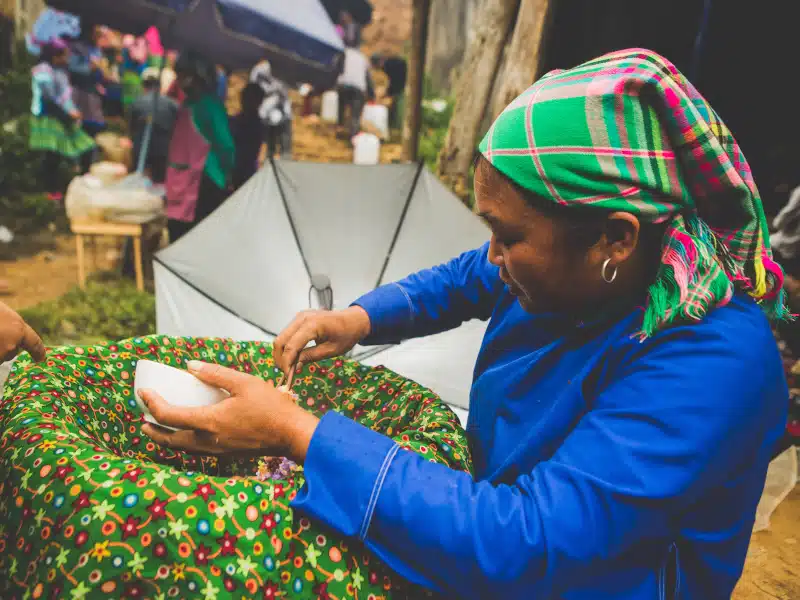
After visiting Hamburger Hill, the journey continues to the Ta Oi villages, in the heart of the A Luoi mountains. This stop offers a glimpse into the daily life of local communities, notably through observing the traditional weaving practised by the village women. The carefully repeated movements bear witness to know-how passed down from generation to generation.
A stop at the A Roang hot springs provides a calmer interlude before the night spent in a stilt house in the village of Aka Chi. This immersion in the highlands makes it possible to discover a more preserved environment, where traditions still play an important role in everyday life.
The shared dinner and traditional music performance offer a privileged moment of exchange with the locals. The songs and traditional rhythms extend this cultural immersion in a simple, warm atmosphere.
Spending the night in the village also makes it possible to experience a more peaceful pace of life, far from the big cities. This stop adds a more intimate dimension to the trip and creates a strong contrast with the historical sites visited along the way.

Through the DMZ, Vietnam’s living memory
The next morning, the road heads towards Quang Tri Province, following Highway 15 and several emblematic sites of the Vietnamese demilitarised zone. Dakrong Bridge marks a first stop before visiting the Khe Sanh Combat Base and Ta Con airfield, where various military remnants can still be seen.
After a break in Dong Ha, the journey continues towards the 17th parallel. Hien Luong Bridge and the Ben Hai River recall the border that once separated North and South Vietnam, becoming one of the most striking symbols of this period of division.
The itinerary ends with the discovery of the Vinh Moc Tunnels, dug to allow residents to survive the bombardments. This visit provides a more concrete view of living conditions during the war and concludes the journey at one of the most significant historical sites in central Vietnam.
As the visits unfold, this crossing of the DMZ reveals a Vietnam marked by its past, yet whose landscapes and villages today tell a different story—more peaceful and deeply human.


 Français
 English


