

- Travel through the villages differently.
- Observe the artisans’ gestures.
- Follow along the Perfume River.
- Discover Hue off the beaten track.
- Slow down to the rhythm of the Vietnamese countryside.
At the slow pace of Hue’s paths
This day in Hué offers a different perspective on the former imperial capital, far from the classic routes and set itineraries. Here, the journey unfolds at the pace of the bicycle and the Perfume River, in a smooth alternation between craft villages, peaceful countryside and major sites in Vietnamese history. The itinerary favors a slow, almost natural approach, where each stop fits into a continuous, sensory experience of the land, along the paths and landscapes crossed, imagined by our tailor-made travel agency.
The charm of this experience lies as much in the encounters as in the landscapes met along the way. Very quickly, the city fades away to make room for quiet roads, plant scents carried on the warm air, and simple scenes of everyday life that appear around each bend. Hué then reveals itself in a more intimate, more everyday dimension too, during a trip to Vietnam, where you observe as much as you travel, without ever rushing the rhythm of the place.
Through the craft villages of Hue
The morning begins with a departure from your hotel for a bike ride towards the flower-growing village of Tien Non. Gradually, the urban bustle gives way to quieter paths lined with gardens, small canals and lush vegetation. The route unfolds at a gentle pace, ideal for easing naturally into Hue’s landscapes and discovering a more rural daily life, far from the city’s rhythm.
As the tracks wind on, the village of Tien Non appears as a place deeply connected to local floral culture. Flowers play an essential role here, shaping the landscape as much as they accompany residents’ everyday life. The atmosphere is peaceful, carried by the simplicity of the scenes along the way and by the slow tempo of the surrounding countryside.
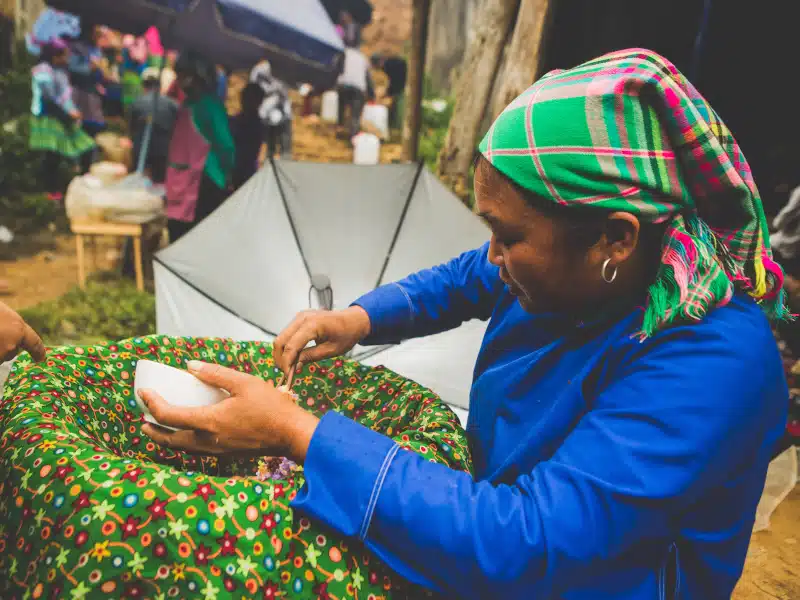
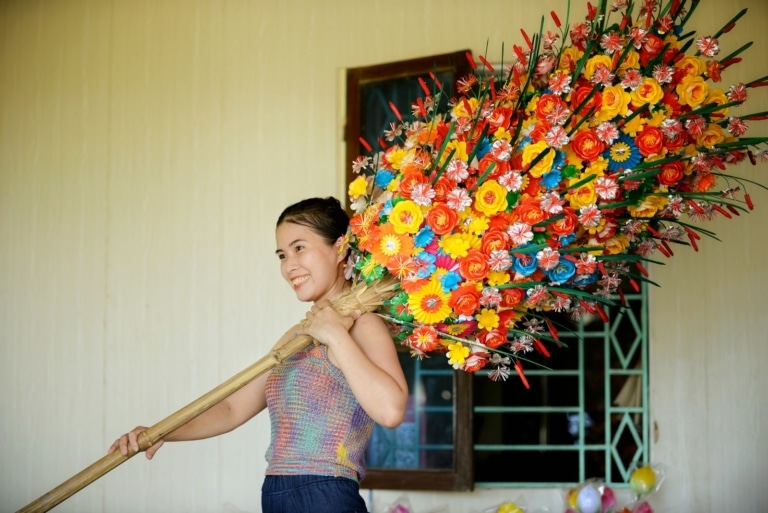
The road then continues to the village of Thanh Tien, renowned for its know-how in paper flowers. Here, craftsmanship remains deeply rooted in local traditions and has been passed down for generations. A stop allows you to try your hand at this delicate practice, where every gesture requires precision and patience. This moment offers a more tangible insight into the artisanal way of life that still shapes certain villages around Hue.
Between peaceful countryside and the Perfume River
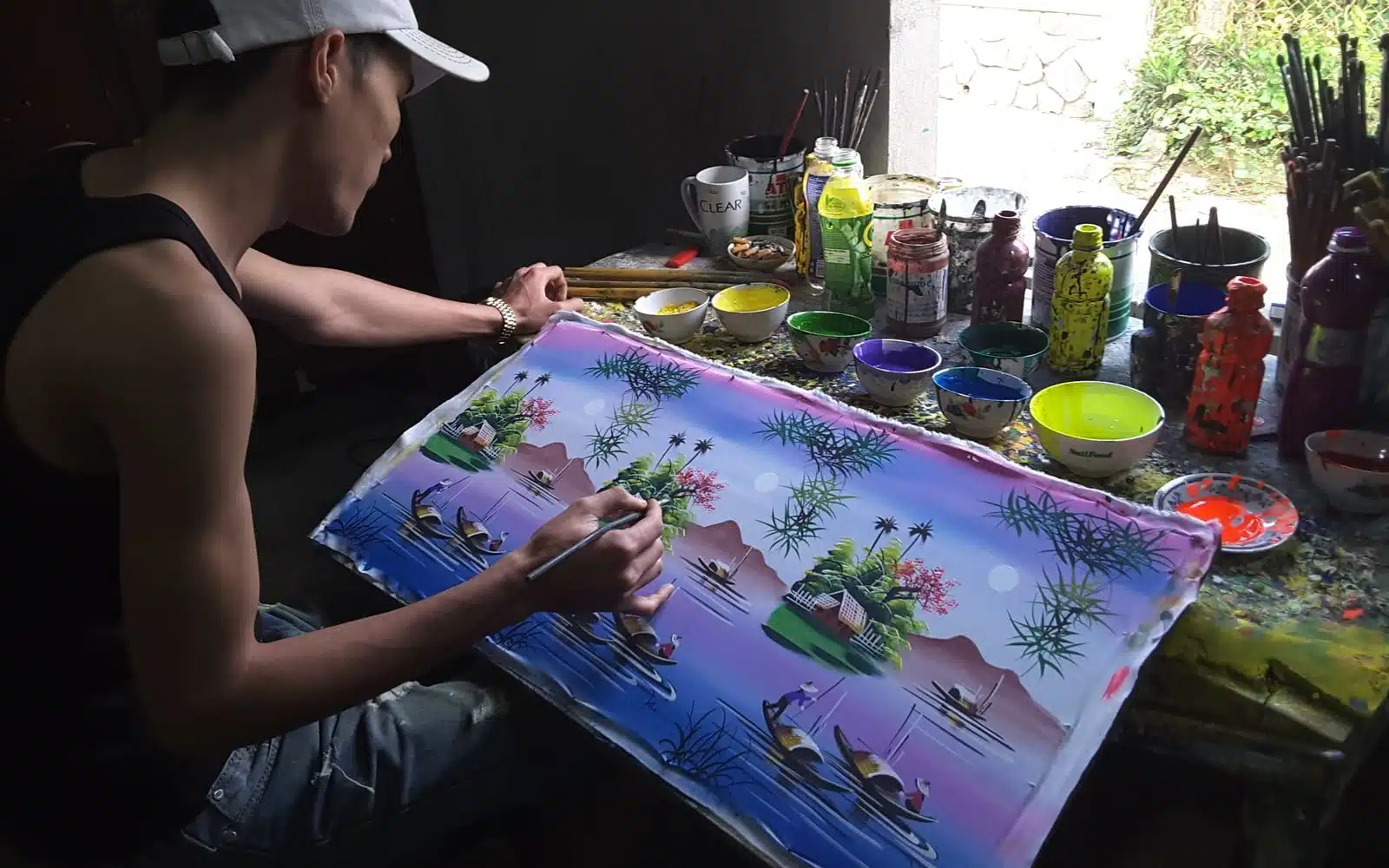
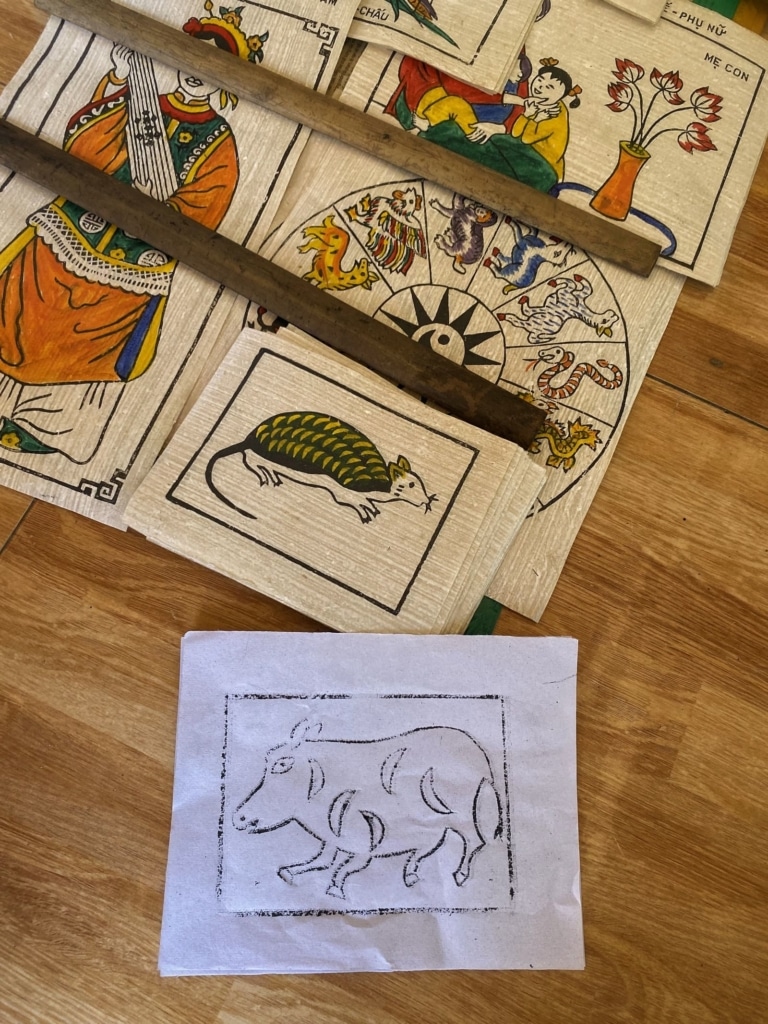
Next comes the village of Sinh, known for its traditional folk paintings. The atmosphere subtly shifts, carried by the colours of the workshops and the hand-painted scenes that tell part of the local cultural heritage. You discover another side of Hue—more artistic, yet still deeply tied to everyday life and the region’s traditions.
The ride then continues through the countryside, along quiet lanes, open fields and shaded stretches where time seems to slow down naturally. This crossing reveals another facet of Hue, more understated and rural, far from the major historical sites that made the former imperial capital famous.
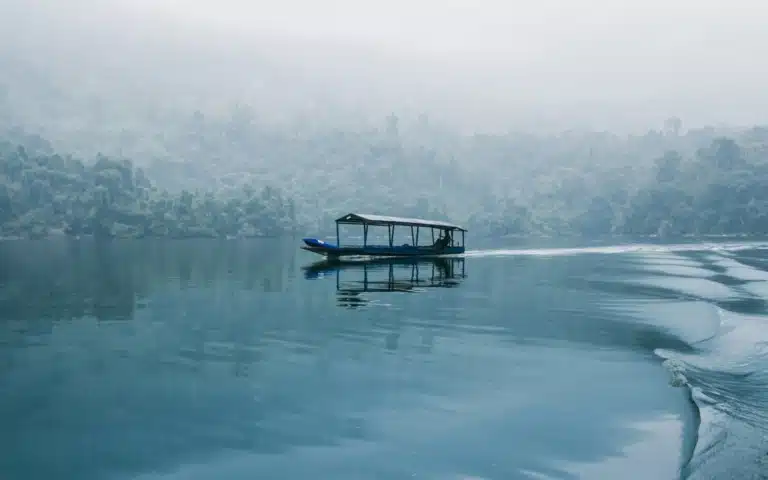
The itinerary then changes pace with a boat crossing on the Perfume River. From the water, the scenery unfolds differently, in a quieter, more contemplative atmosphere. The banks drift by slowly, with vegetation, homes and glimpses of daily life along the way, until reaching Dong Ba Market.
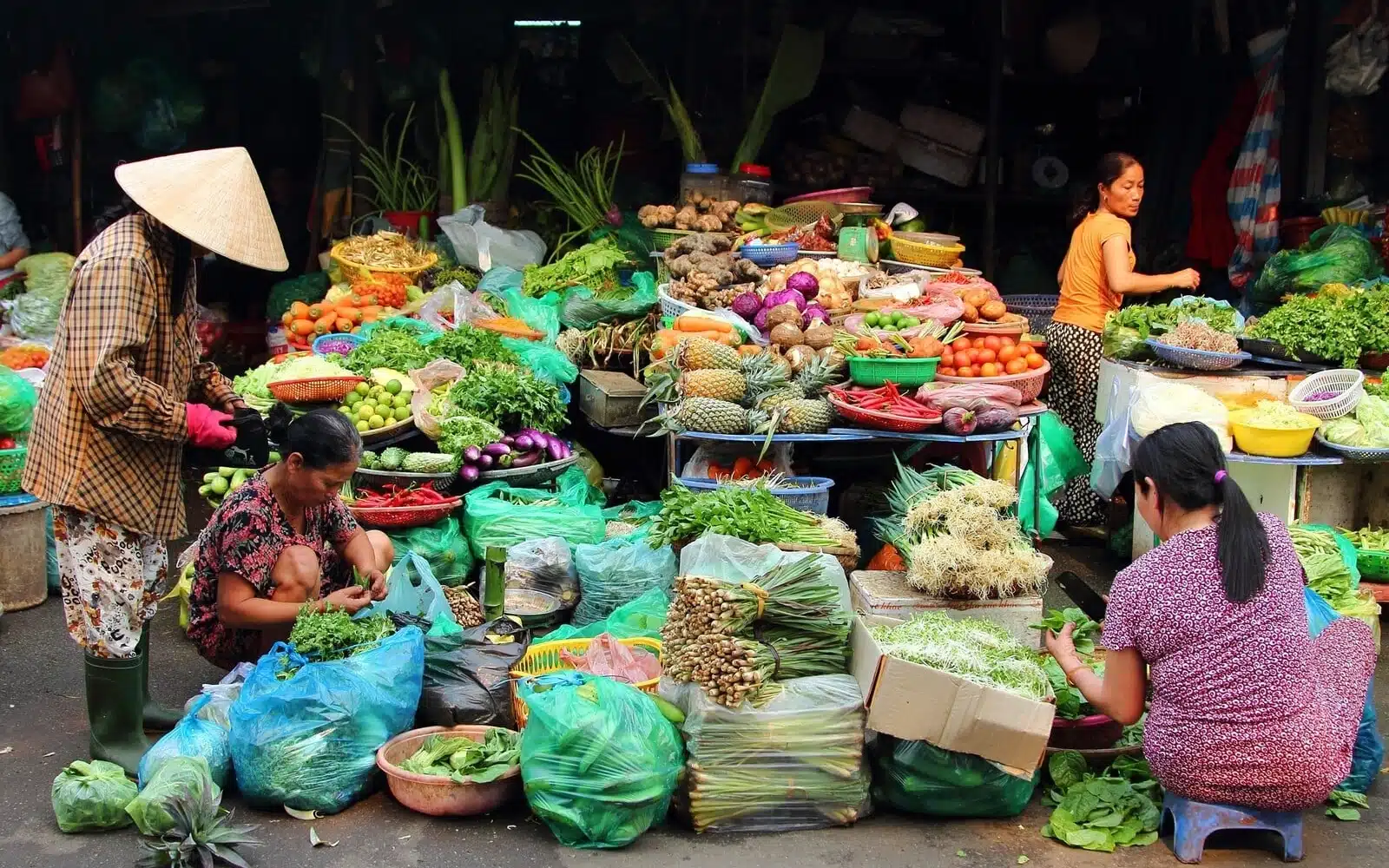
On arrival, the market reveals a dense, lively atmosphere, close to local everyday life. The aisles, the exchanges and the energy of the place offer a vibrant immersion into life in Hue. Between everyday goods, local habits and the constant flow of visitors, the market contrasts with the calm of the villages visited earlier in the day.
Hue’s imperial and spiritual side
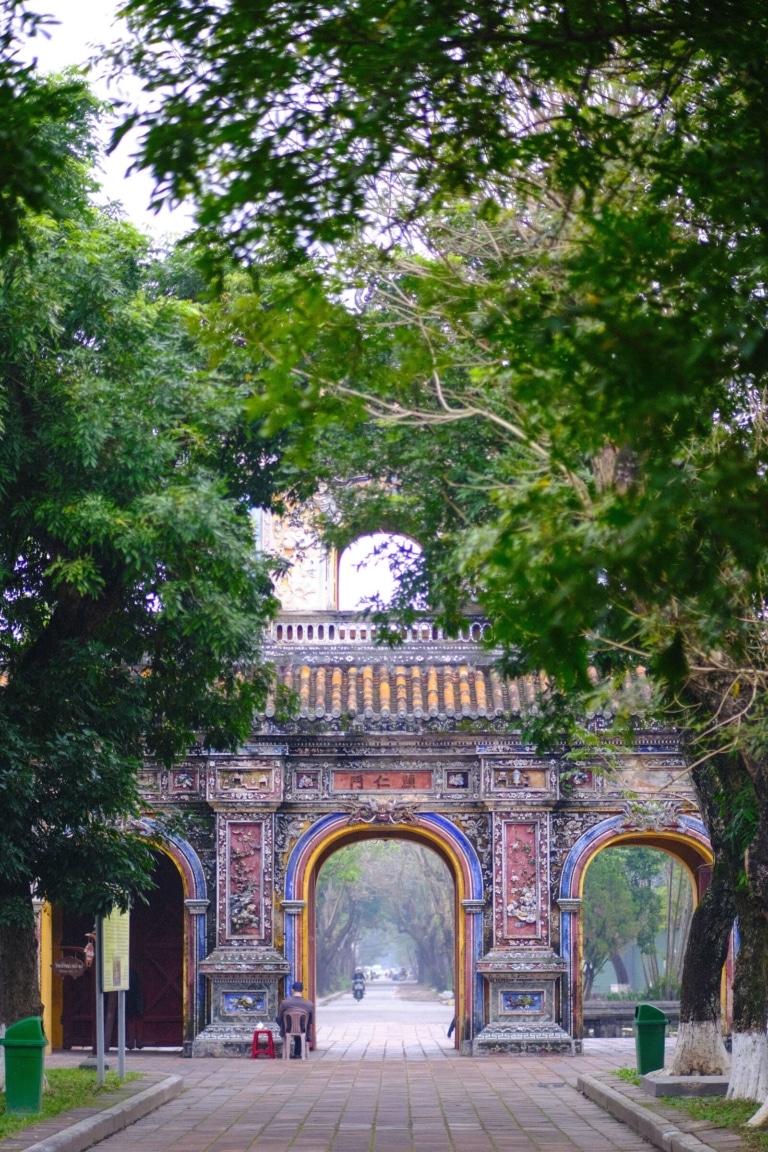
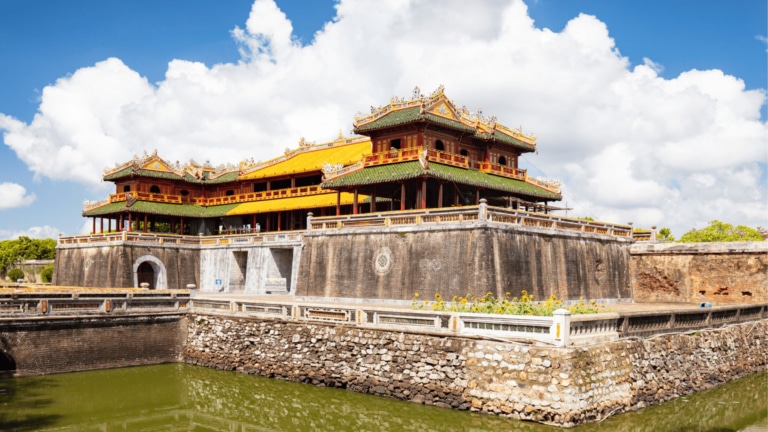
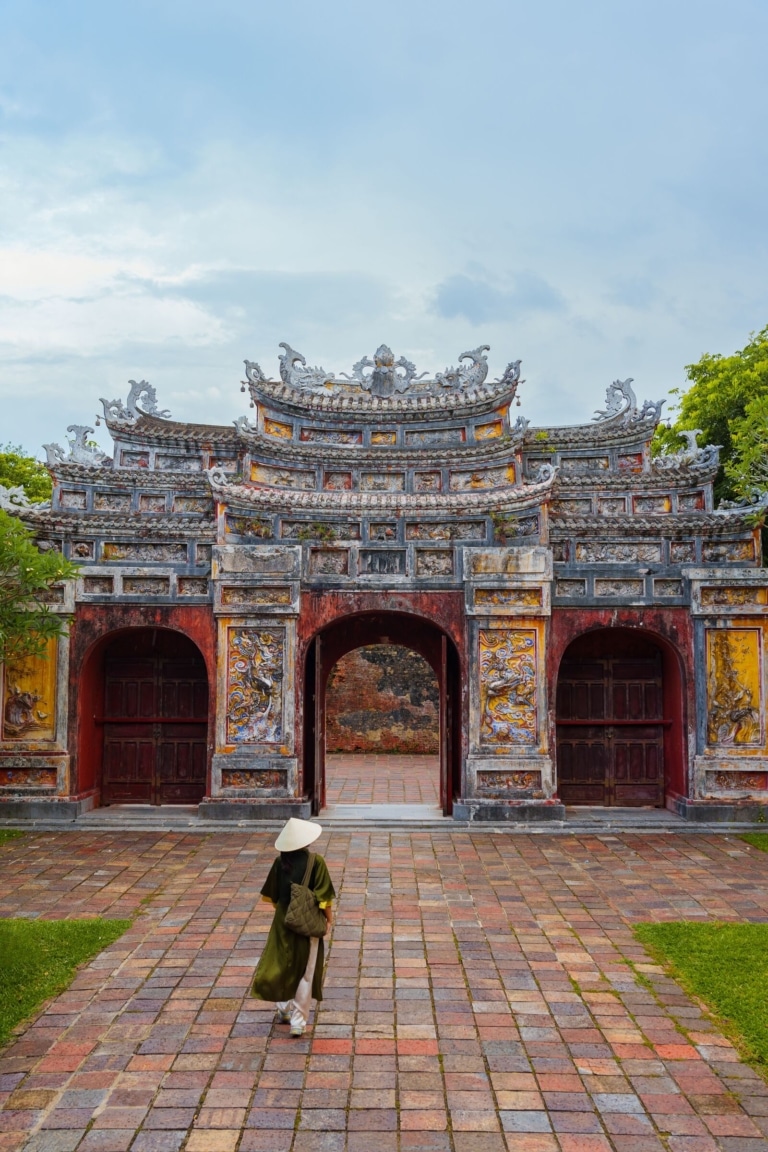
After lunch, the discovery continues with a visit to the Imperial City, the former political heart of the Nguyen dynasty, Vietnam’s last royal family. Through its walls, courtyards and remains, the site reveals an essential part of Hue’s history and offers a glimpse of the refinement of the former imperial citadel.
The atmosphere here is different—more solemn, almost silent in places. The visit helps you better understand Hue’s historical role while exploring areas once reserved for life at the imperial court.
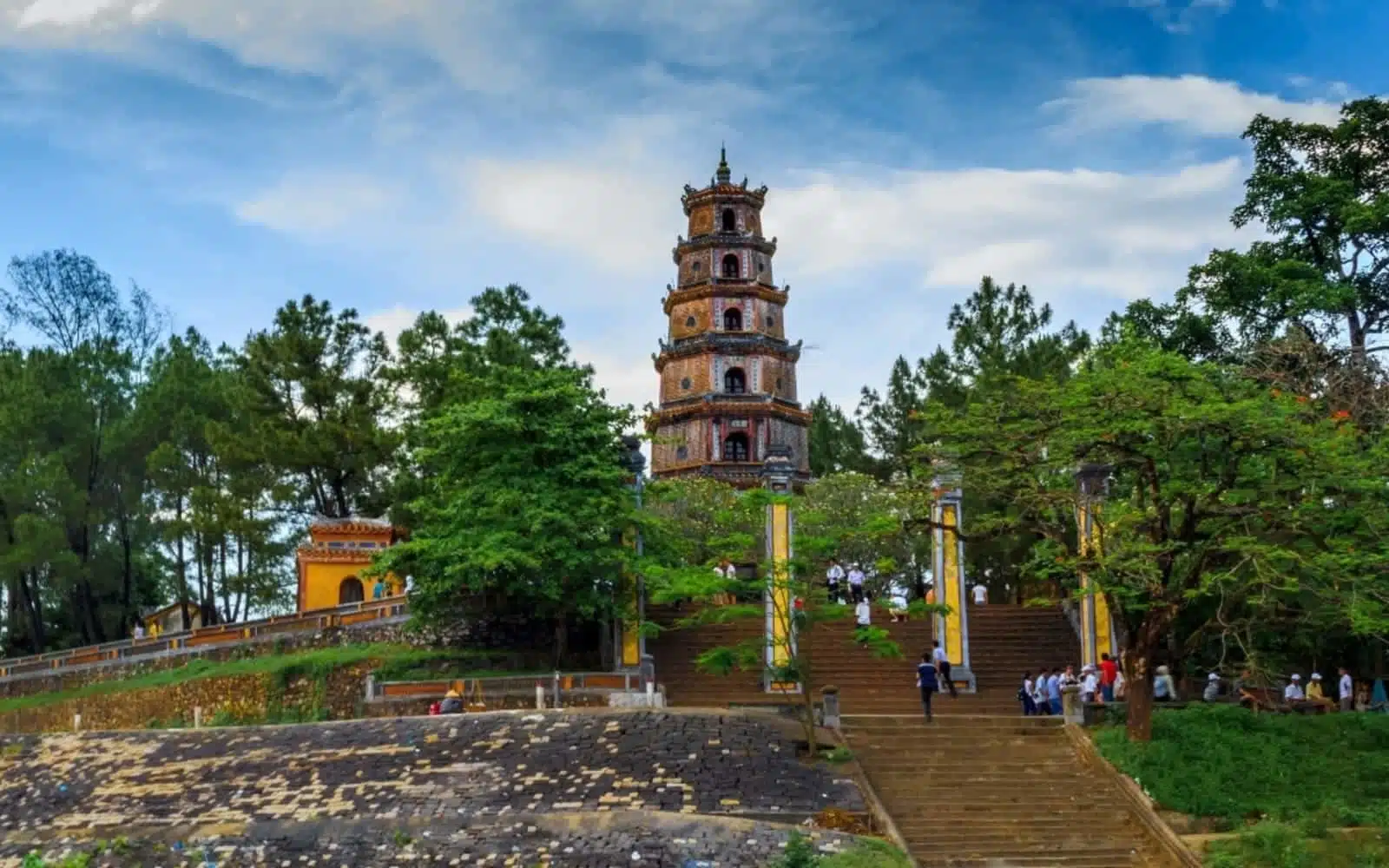
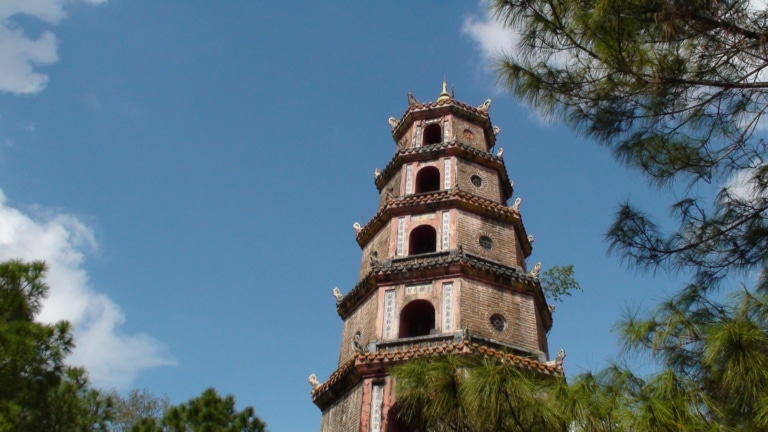
The day ends at Thien Mu Pagoda, set on high ground above the river. This emblematic site adds a more spiritual dimension to the journey, in a calm, contemplative atmosphere that contrasts with the bustle of the market visited earlier. The setting naturally invites you to slow down one last time before returning to the hotel.
Between craft villages, peaceful countryside, the river and imperial heritage, this day reveals a side of Hue that is at once lively, gentle and deeply rooted in its history and traditions.



 Français
 English