



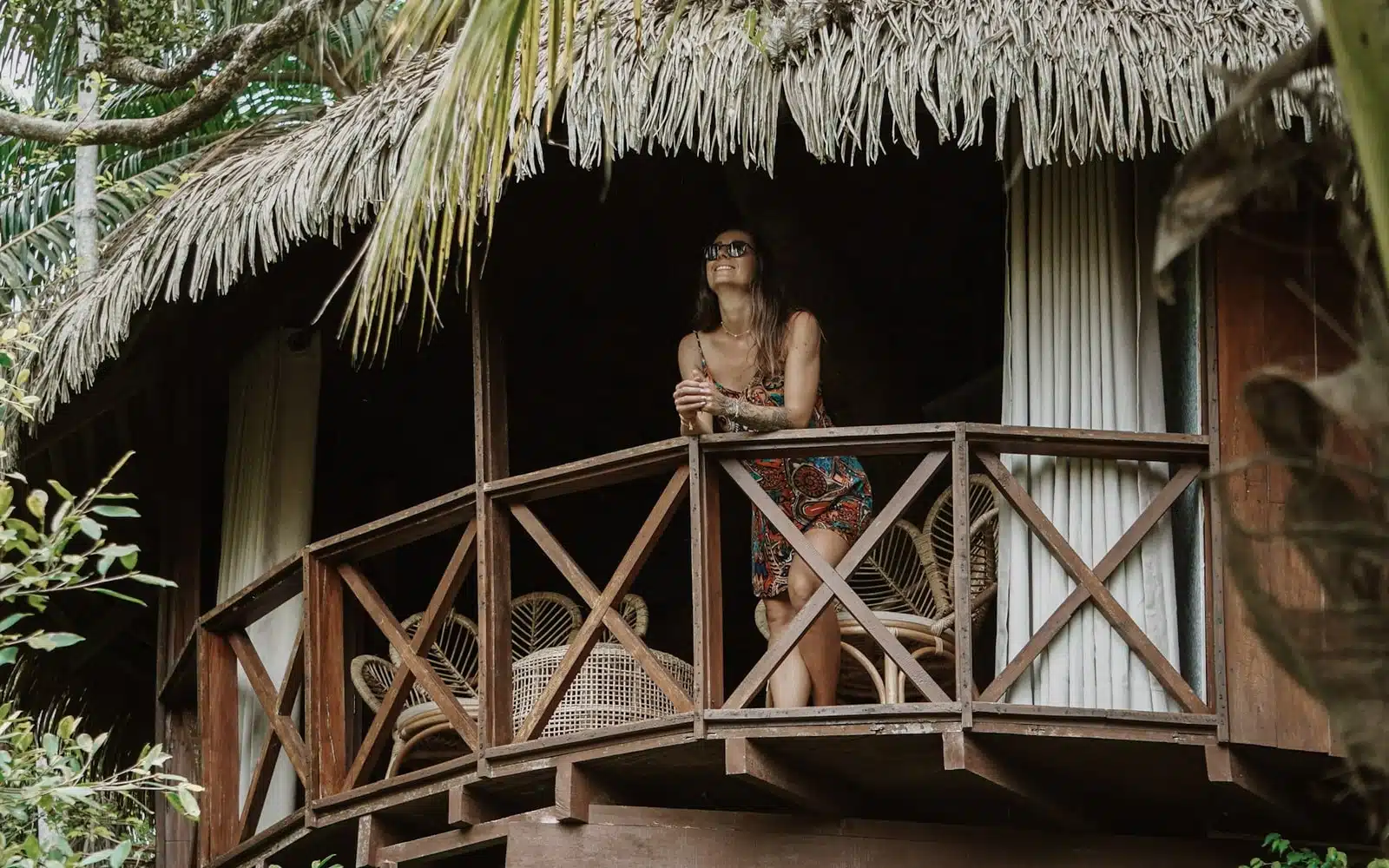
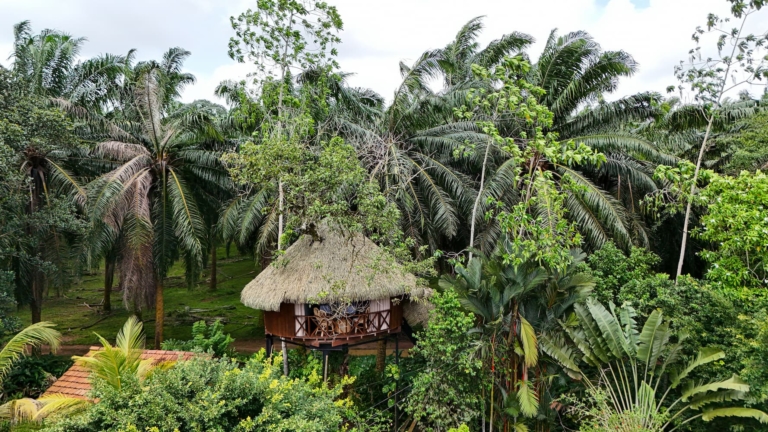
- Sleep in the trees while still enjoying real comfort.
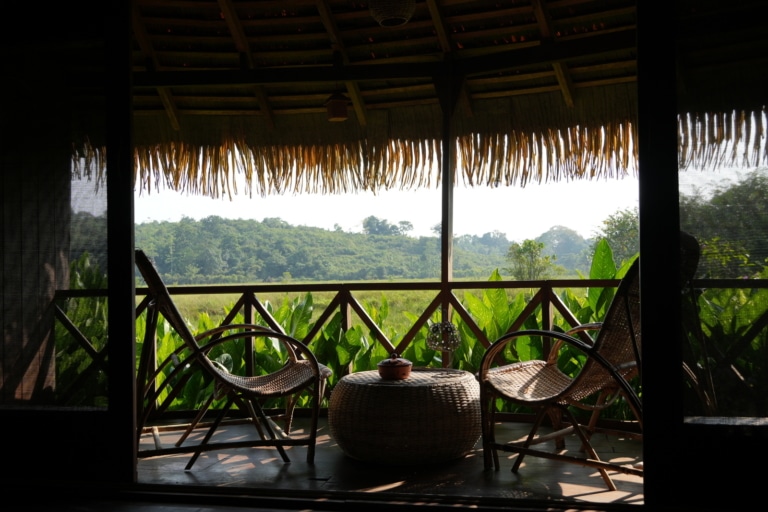
- Wake up facing the rice fields, in a peaceful, light-filled atmosphere.
- Discover local life on walks around the ecolodge.
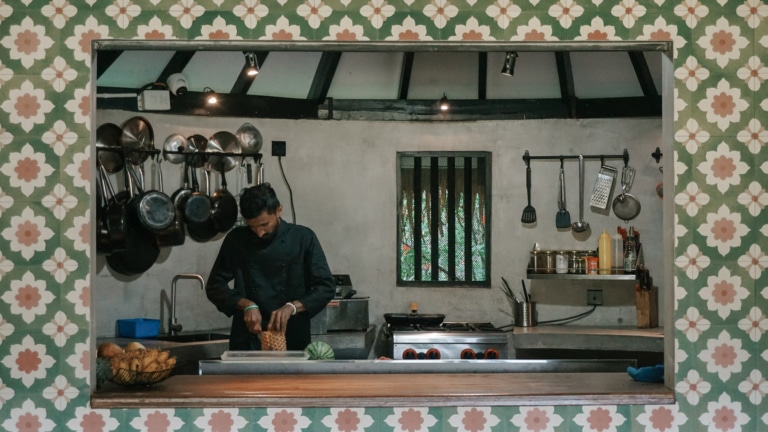
- Enjoy cuisine prepared with local produce, from the vegetable garden and the catch of the day.
- Discover a tastefully chosen decor, where every object tells a story.
A suspended address, between comfort and nature
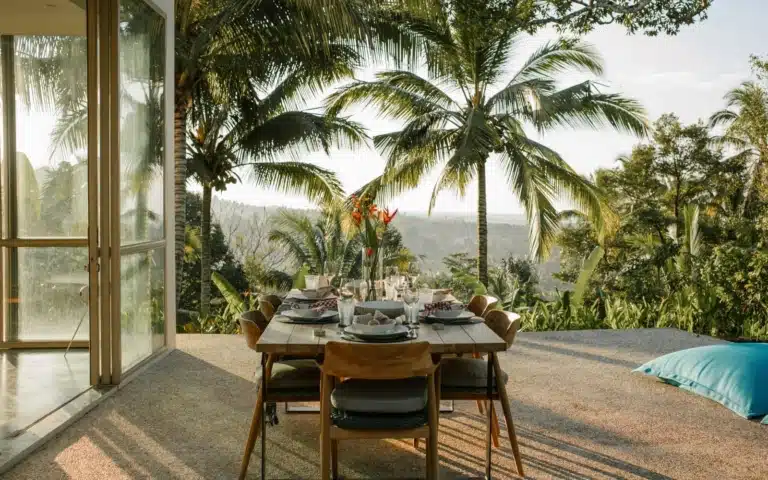
At Huma Terra, the stay begins with a rare feeling: stepping away from the world without giving up comfort. Here, you sleep in the trees, as close to nature as possible, yet in a thoughtfully designed setting. The experience is nothing like a rustic or makeshift interlude. On the contrary, it invites you to rediscover a precious kind of simplicity, in a place where every detail seems to have been chosen to support calm, rest, and the pleasure of simply being there. This address was selected by our sustainable travel agency, for its harmony with the environment and the quality of the experience it offers.
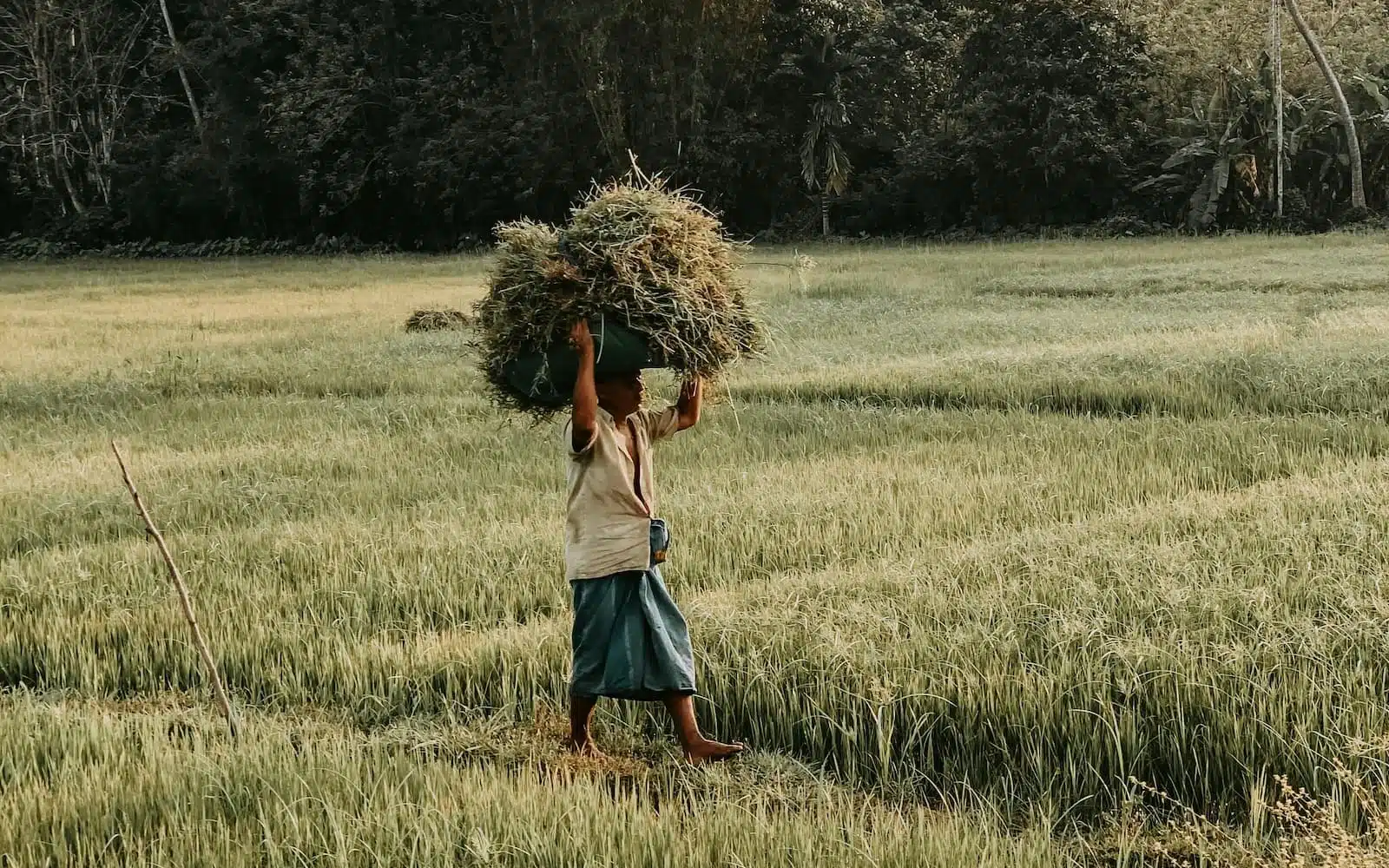
When you wake up, your eyes settle on the rice paddies. The landscape slowly opens up in a light that shifts with the hours, and you take the time to look even before starting the day. This first image sets the tone for the stay: a slower, more mindful rhythm, where nature is not a backdrop but a constant presence. You let yourself be carried by the silence, by the shades of green, by that sense of space that naturally invites you to breathe more deeply, in the heart of a trip to Sri Lanka.
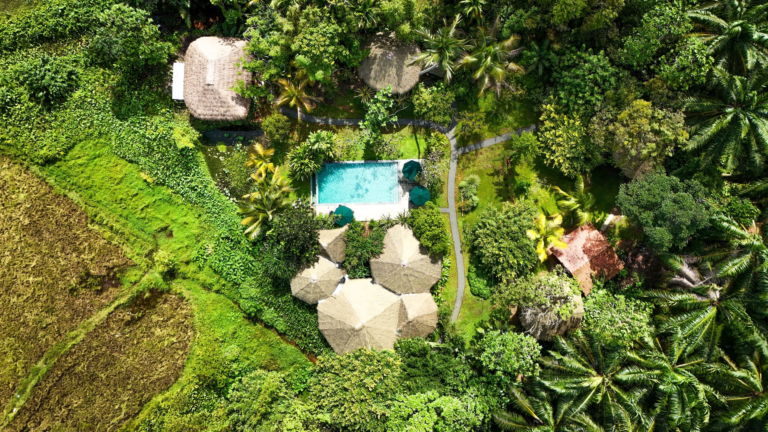
Huma Terra feels like a gentle retreat, with no set programme. You come here to rest, read, enjoy the peace and quiet, and let the serenity of the place wash over you. The swimming pool becomes a refuge during the hottest hours, a simple, light-filled space where you can extend that feeling of letting go. For those who wish, a traditional Ayurvedic massage completes this interlude, in the same spirit: taking care of yourself, without ostentation, with a sense of rightness.
Around the ecolodge, sharing local life
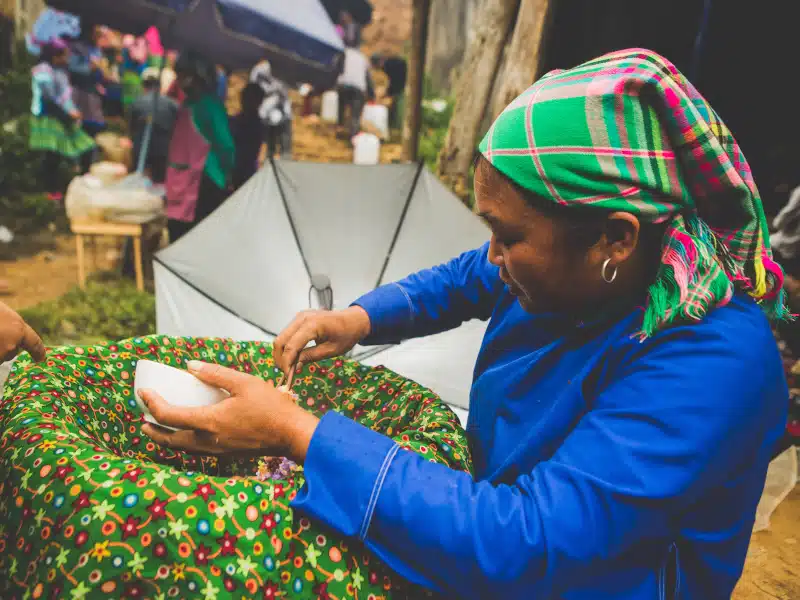
From Huma Terra, walks in the surrounding area offer a gentle introduction to the region’s everyday life. You leave the ecolodge on foot or by taking the time to follow the nearby roads, without chasing anything spectacular. It’s the simple scenes that shape the experience: the houses you pass along the way, everyday gestures, the residents’ smiles on the road. Nothing is forced, nothing is staged. Encounters happen quietly, as the path unfolds.
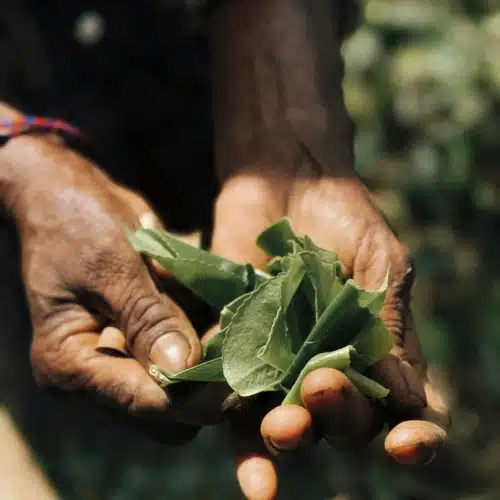
Discovery can also lead to a small tea workshop, accessible only to the ecolodge’s guests. This discreet stop adds another layer of depth to the stay. It offers a chance to get close to local know-how in a privileged setting, far from more crowded visits. Here again, the interest lies less in an accumulation of explanations than in the quality of the moment: watching, understanding, taking the time to enter a place that retains its intimate character.
For travelers looking for a more active escape, it’s also possible to go kayaking on the lagoon nearby. The experience begins on the lake, in a peaceful setting where you move along with the water, observing the banks, dense vegetation, and the lush nature that lines the route. Little by little, the landscape opens up, until you reach the edge of the Indian Ocean. Faced with its immensity, the outing takes on a different scale—between silence, movement, and a sense of space.
A place shaped by details
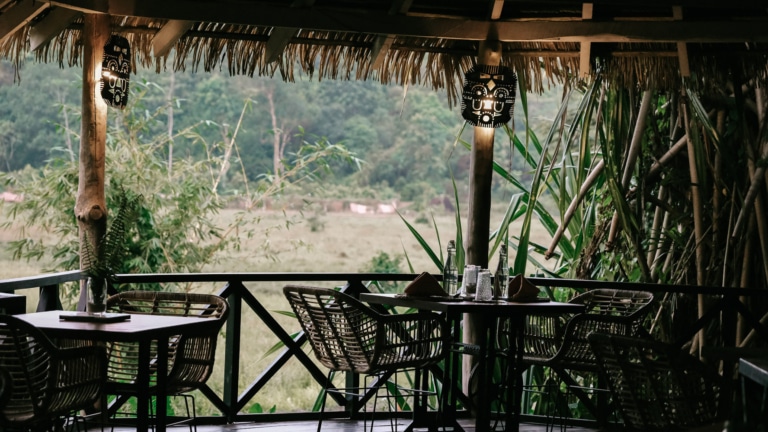
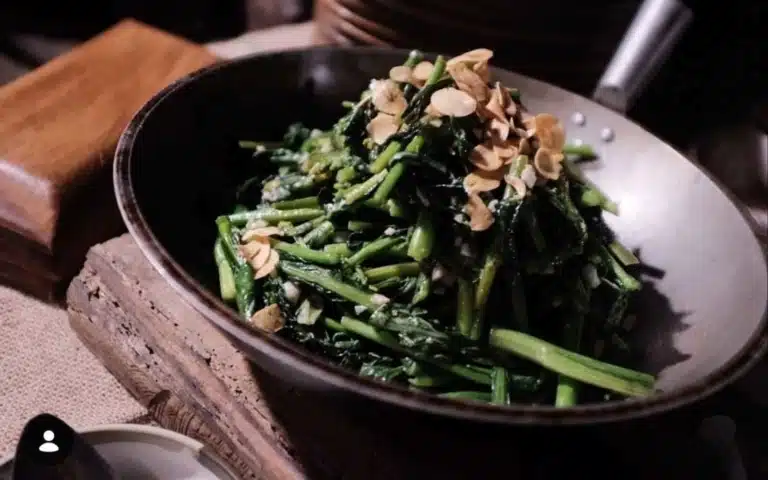
This connection to the land is also reflected on the plate. At Huma Terra, the cuisine highlights local products, selected as close as possible to their source. Fish and seafood are freshly caught, bought directly from the boat a few kilometers away. The vegetables come from the kitchen garden. This proximity gives meals a particular self-evidence: that of a grounded, generous, sincere cuisine, where the freshness of the ingredients is enough to create pleasure.
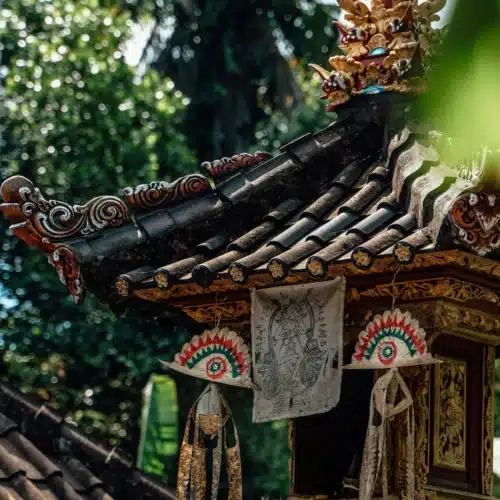
What also sets Huma Terra apart is the attention paid to its decor. The place does not seek to reproduce an expected style. Objects have been chosen with taste, but above all with a story. They give the ecolodge a distinctive soul, a depth that reveals itself little by little, as if each element had found a second life here. Nothing feels decorative in a superficial sense: every piece tells something.
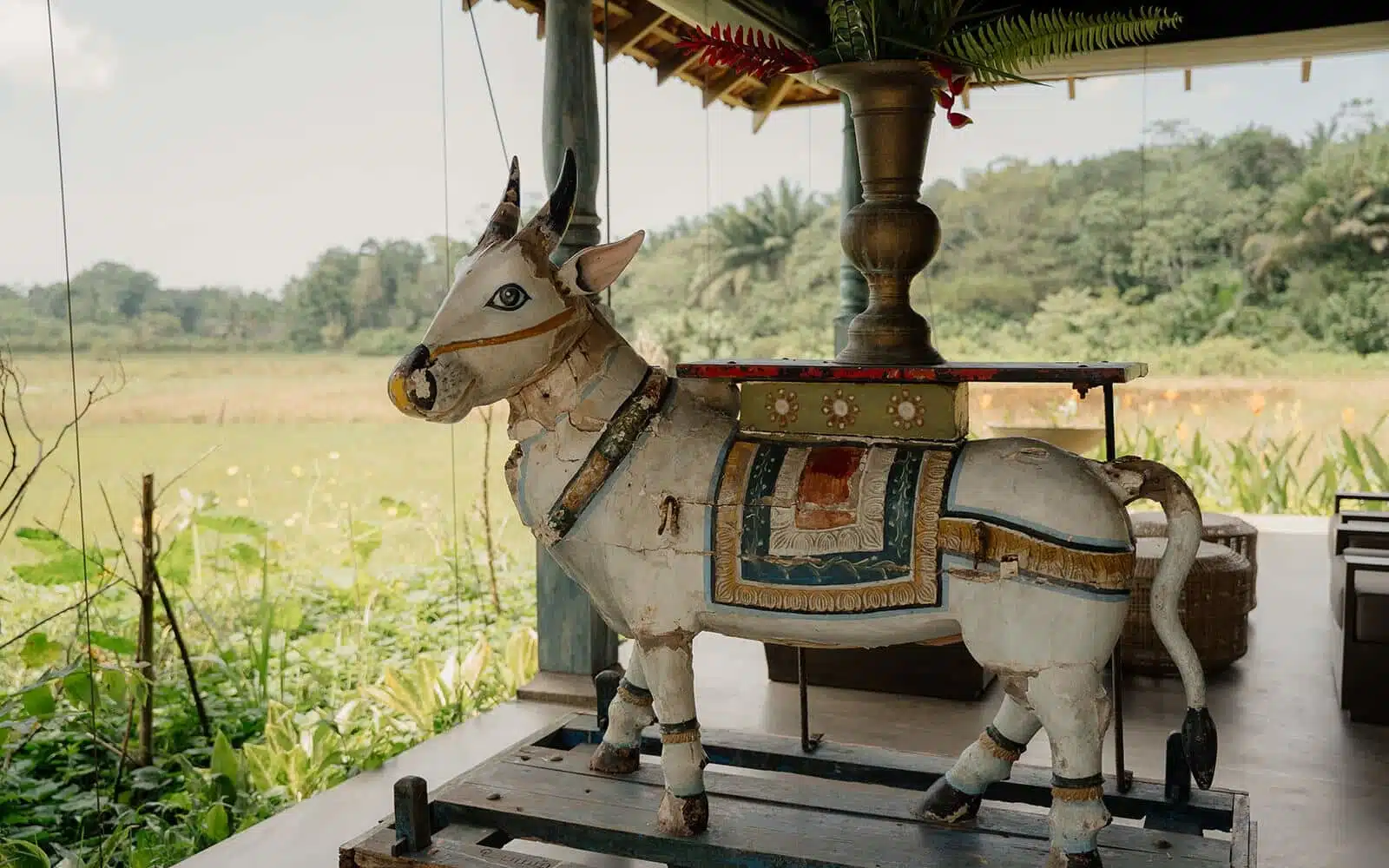
The posts at reception come from an old house in Galle Fort. The imposing gate was sourced from an antique dealer in Galle. The restaurant’s colorful cement tiles were handmade in the Colombo region by a Franco–Sri Lankan couple. At reception, a cow and a horse welcome visitors: they once adorned Hindu parade chariots in Jaffna. Together, these elements create a sensitive setting—both elegant and deeply rooted in the history of places and objects.
A parenthesis that leaves its mark
This aesthetic gives the stay an extra dimension. You’re not passing through a standardized place, but an inhabited space—thought through, put together with patience. Comfort is not limited to the room or the amenities: it also arises from this harmony between materials, colors, objects, and landscapes. Huma Terra thus offers a rare balance between discreet refinement and authenticity, without any heavy-handed effect.
You leave this stay with vivid images: waking up facing the rice fields, the freshness of a local product on your plate, a smile exchanged on the road, the calm of an afternoon by the pool, the silent presence of an old object. Huma Terra is an address for those who love places with a soul, stays that leave room for time, and experiences that don’t need to overdo it to make a lasting impression.



 Français
 English