


- Take part in an authentic, private Balinese ritual.
- Discover the symbolism of Melukat alongside a Mangku.
- Experience a deep inner physical and emotional cleansing.
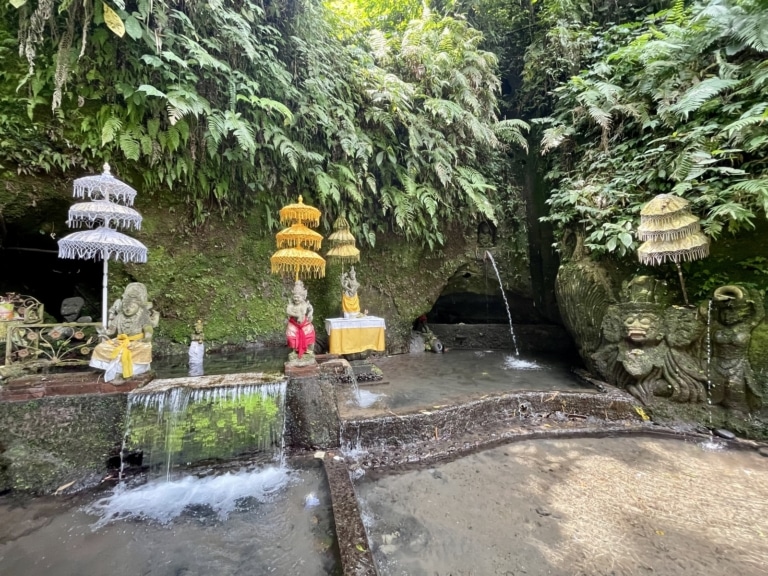
- Visit a preserved sacred spring in the heart of Bangli.
- Enjoy an intimate moment to reconnect with yourself.
An intimate encounter with a living tradition
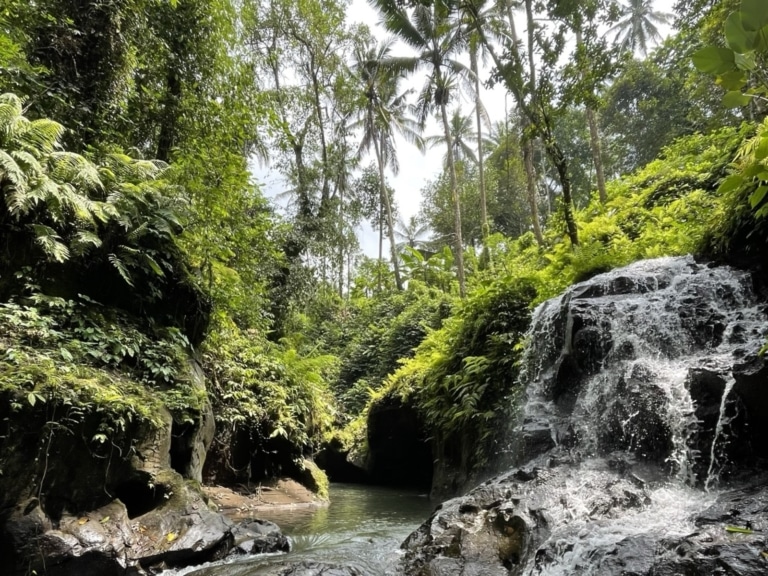
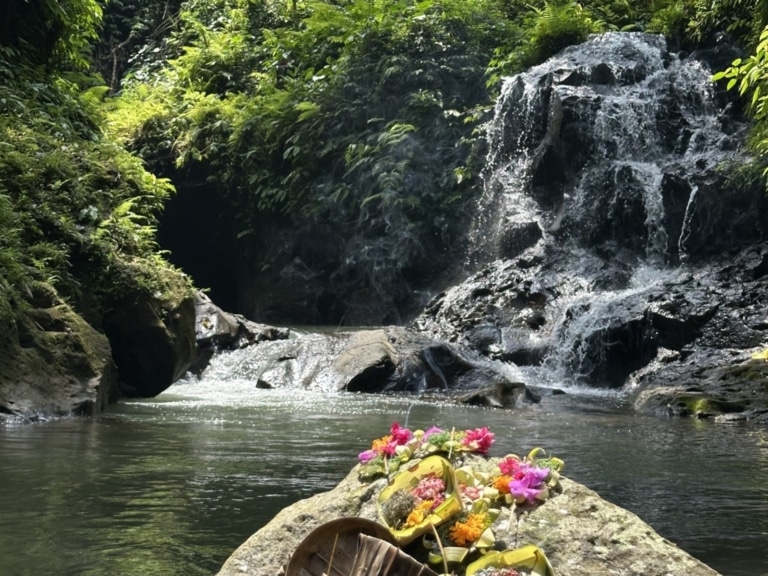
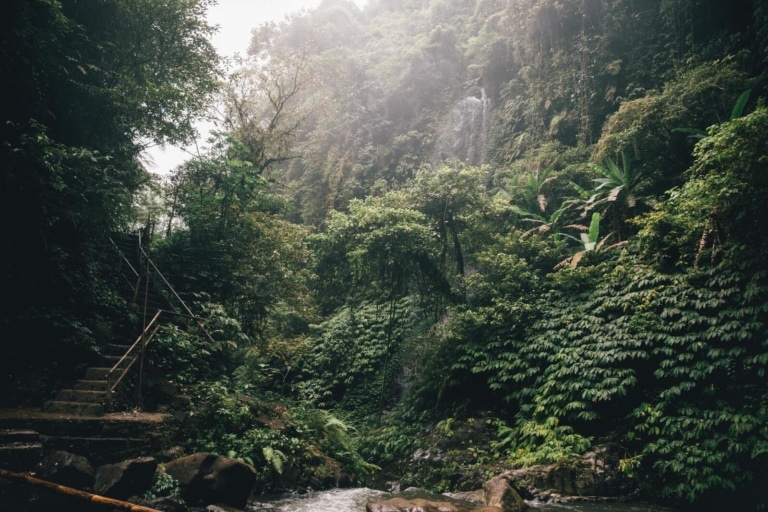
In the heart of the Bangli region, far from the bustle of the most visited temples, a discreet spring flows along the riverbank, almost cut off from the world. This is where Melukat takes place, one of the purification rituals most deeply rooted in Balinese spirituality. This experience is part of a broader discovery designed by our authentic travel agency, committed to offering cultural immersions that are fair and respectful.
In this unspoiled place, still frequented by locals for their own ceremonies, the experience takes on a special dimension. Nothing showy, nothing staged: the ritual is part of a living practice, deeply woven into everyday life, to be experienced fully during a trip to Indonesia.
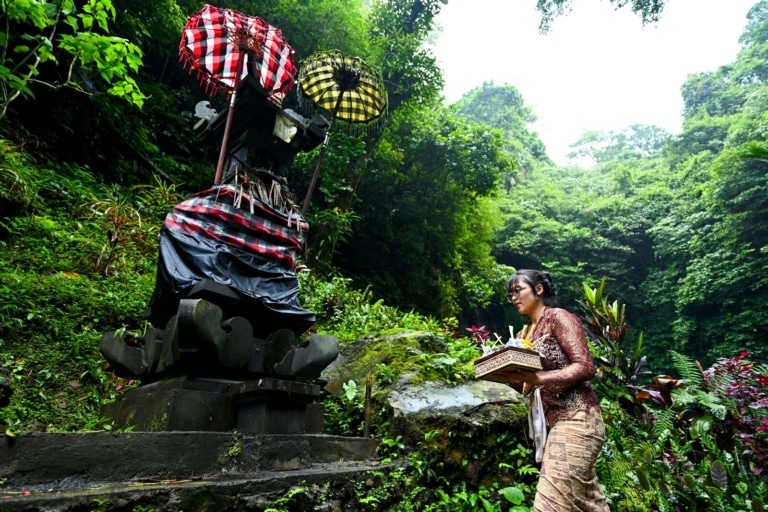
You are accompanied by a Mangku, a local priest and a central figure in Balinese spiritual life. Both guide and guardian of balance, he leads the rituals, watches over the harmony of the temples, and remains deeply connected to the life of his village. This closeness is immediately felt in the way he shares his knowledge. Without theatrics, with a natural simplicity, he guides you step by step, passing on the gestures, intentions, and meaning of each stage.
Entering the ritual, with authenticity and simplicity
Your arrival is gentle. The Mangku welcomes you without formality, then adjusts your sarong, essential for taking part in the ceremony. This first gesture already marks a kind of transition: little by little, you move from the posture of observer to that of participant.
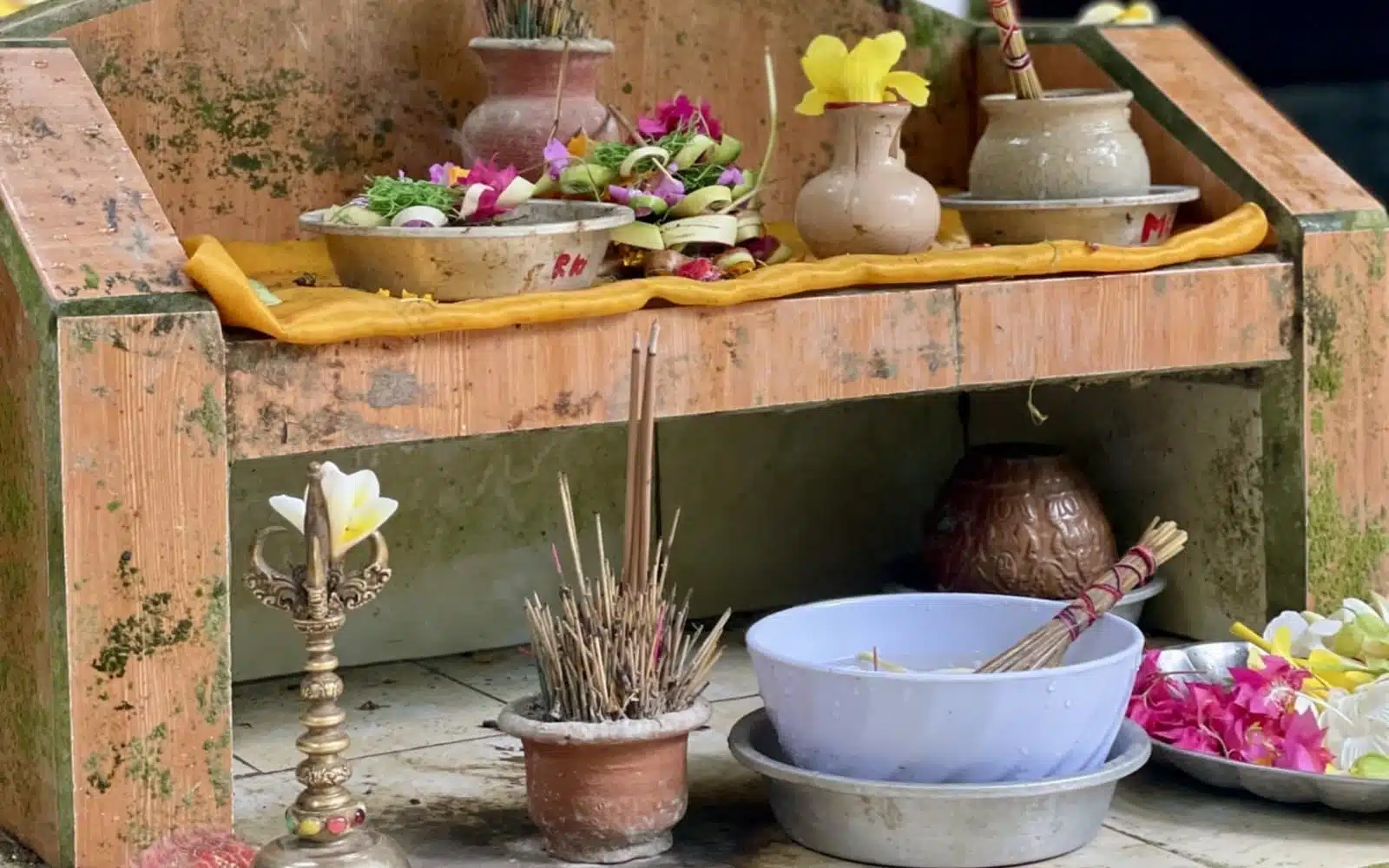
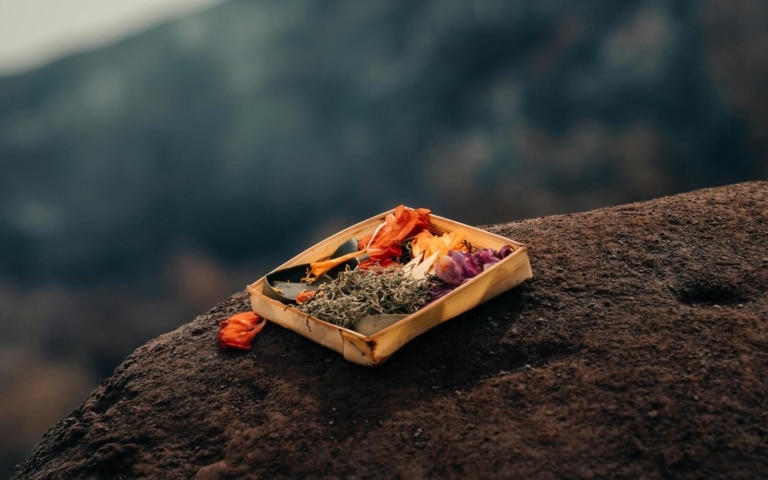
Before reaching the spring, you take part in preparing a few canang sari. These small flower offerings, ubiquitous in Bali, are made here simply, in a gesture that invites you to slow down and focus.
The ritual begins with a symbolic purification. Using a stone taken from the riverbank, a red earth paste is prepared and then applied to the body. This gesture—both tangible and full of meaning—comes before entering the water. The Mangku then explains the intentions to set: what you wish to leave behind, what you choose to welcome.
A prayer opens the ceremony, discreet yet structuring. Unlike certain more withdrawn religious figures, the Mangku lives within his community, in constant connection with its residents. This direct relationship to practice gives the ritual a particularly accessible, embodied dimension.
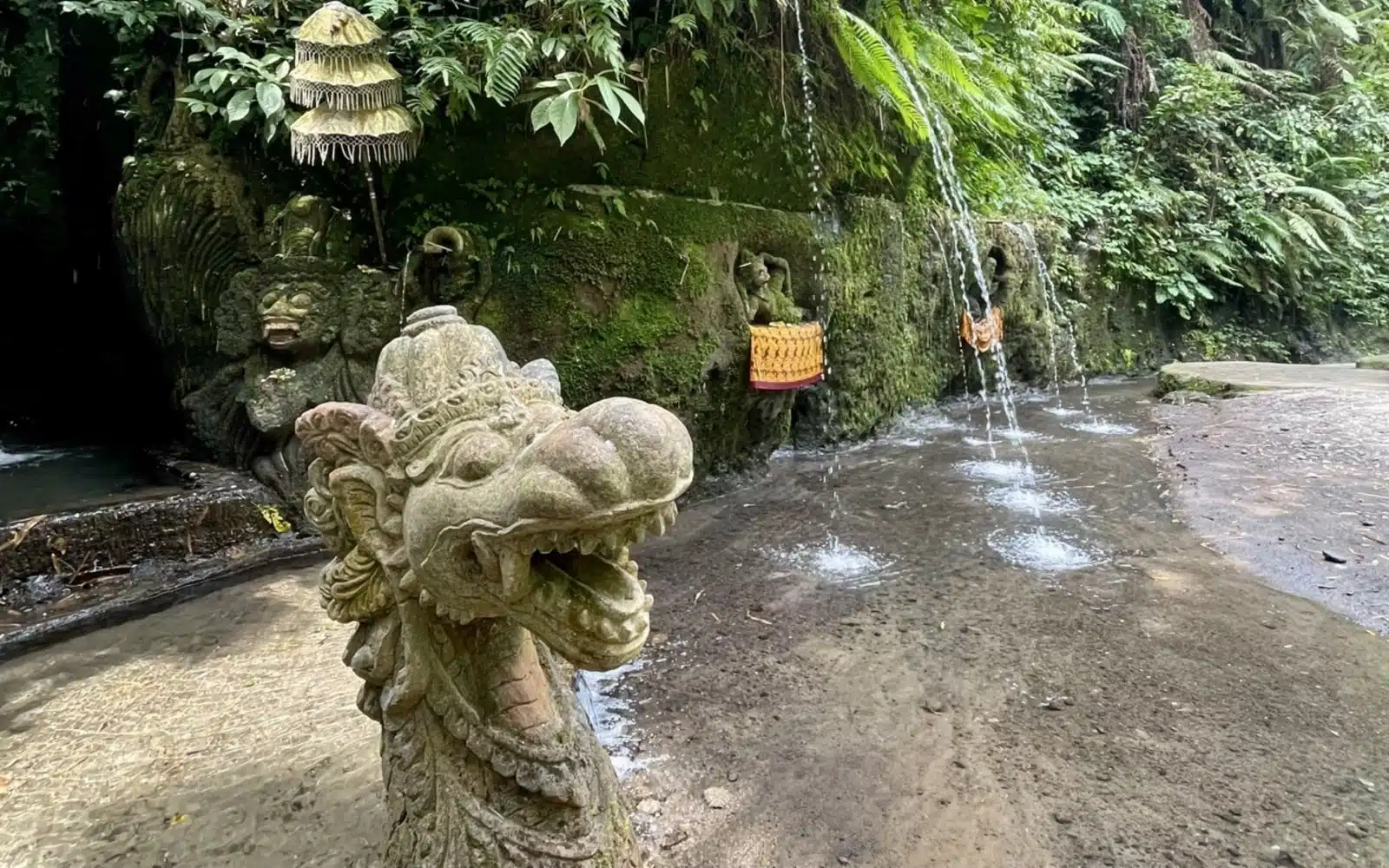
Beneath the sacred springs, a ritual guided by water
You then move toward the first spring. The setting remains simple, almost raw, but your attention shifts elsewhere. The Mangku recites his prayers in Balinese, while you stand beneath the water.
Each spring follows a precise sequence. The water runs over your head, slowly. You drink a few sips, then take the time to form an intention. The rhythm is steady, unhurried.
In Balinese tradition, water is seen as a direct link to spiritual forces. Here, each spring has its purpose: to clarify the mind, soothe emotions, dissolve what holds you back. The ritual does not seek to impress, but to support an inner process, through the repetition of gestures and the continuity of intentions.
The Mangku’s role is not limited to leading the ceremony. He creates the conditions for each person to enter the ritual at their own pace—understanding what they are doing, while also leaving space for personal experience.
Gradually, the experience becomes more introspective. The Mangku’s words almost fade away, giving way to the sound of the water and your own presence.
The ceremony ends with a blessing. Holy water, flowers, grains of rice: symbols of protection and balance, placed with care.

After the ritual, making space for integration
Once the purification is complete, time slows even more. You sit facing the spring, in a moment of pause that is fully part of the experience.
The Mangku invites you to observe what is there, without trying to analyze it. Some feel a sense of lightness, others a sharper clarity, or simply a quiet calm. Nothing is expected; nothing is imposed.
It is possible to extend this moment by bathing freely in the spring. The body, still marked by the ritual, gradually returns to a more ordinary state—but something remains.
Before leaving, you take the time to form a positive thought, as a way to anchor the experience. For many, the ritual acts as a turning point—an inner step that marks a transition, sometimes subtle, sometimes more tangible.


 Français
 English