



- Head up Busuanga’s north coast at dawn on a local boat
- With the Tagbanwa ranger, watch for the dugong’s first breath
- Glide over the seagrass beds and watch the animal graze beneath you
- Experience a quarter of an hour suspended in time, at a distance from the dugong
- End the day among turtles and corals
A rare encounter in the waters of Palawan
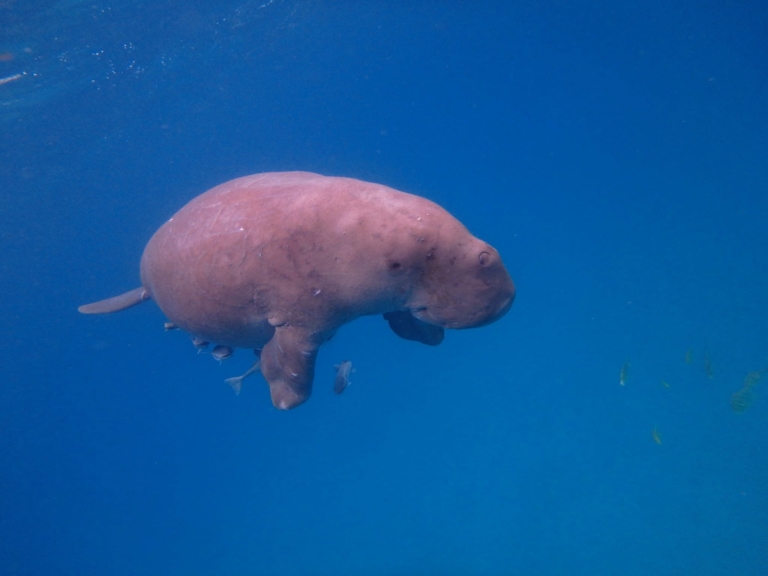
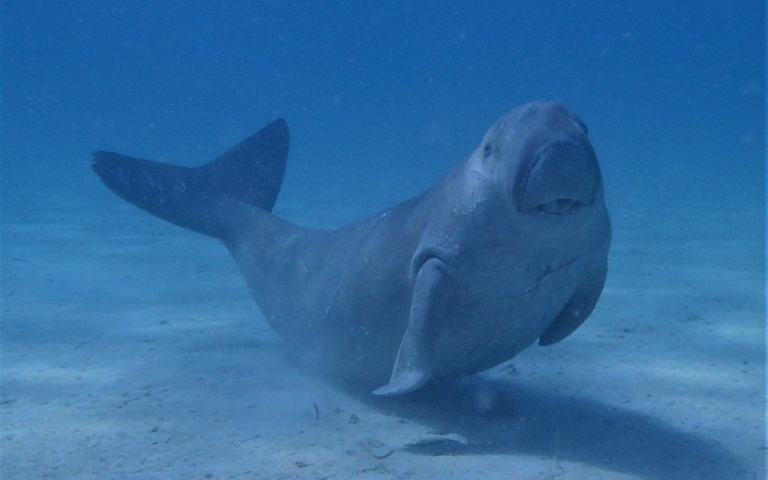
North of Busuanga, in the Coron archipelago, dugongs move through shallow bays, amid the seagrass beds they feed on. This large herbivorous mammal, a cousin of the manatee, belongs to the sirenian family, whose name evokes the mermaids of sailors’ tales. Now threatened in the Philippines, it still finds refuge in these waters of northern Palawan. Setting out to meet it means discovering a discreet animal in a fragile environment, where observation happens on its terms, without ever trying to force closeness.
The day takes place aboard a local boat, accompanied by a dive team and a Tagbanwa community ranger, who watches over this marine territory. No need to be a diver: the experience is accessible with mask and snorkel, as long as you can swim and feel comfortable in the water. Divers can also enjoy this observation using scuba. While sightings are frequent, they are never guaranteed. A share of uncertainty that gives this outing its full meaning, where patience matters as much as the chance of catching a glimpse of the animal.
Heading north of Busuanga in search of dugongs
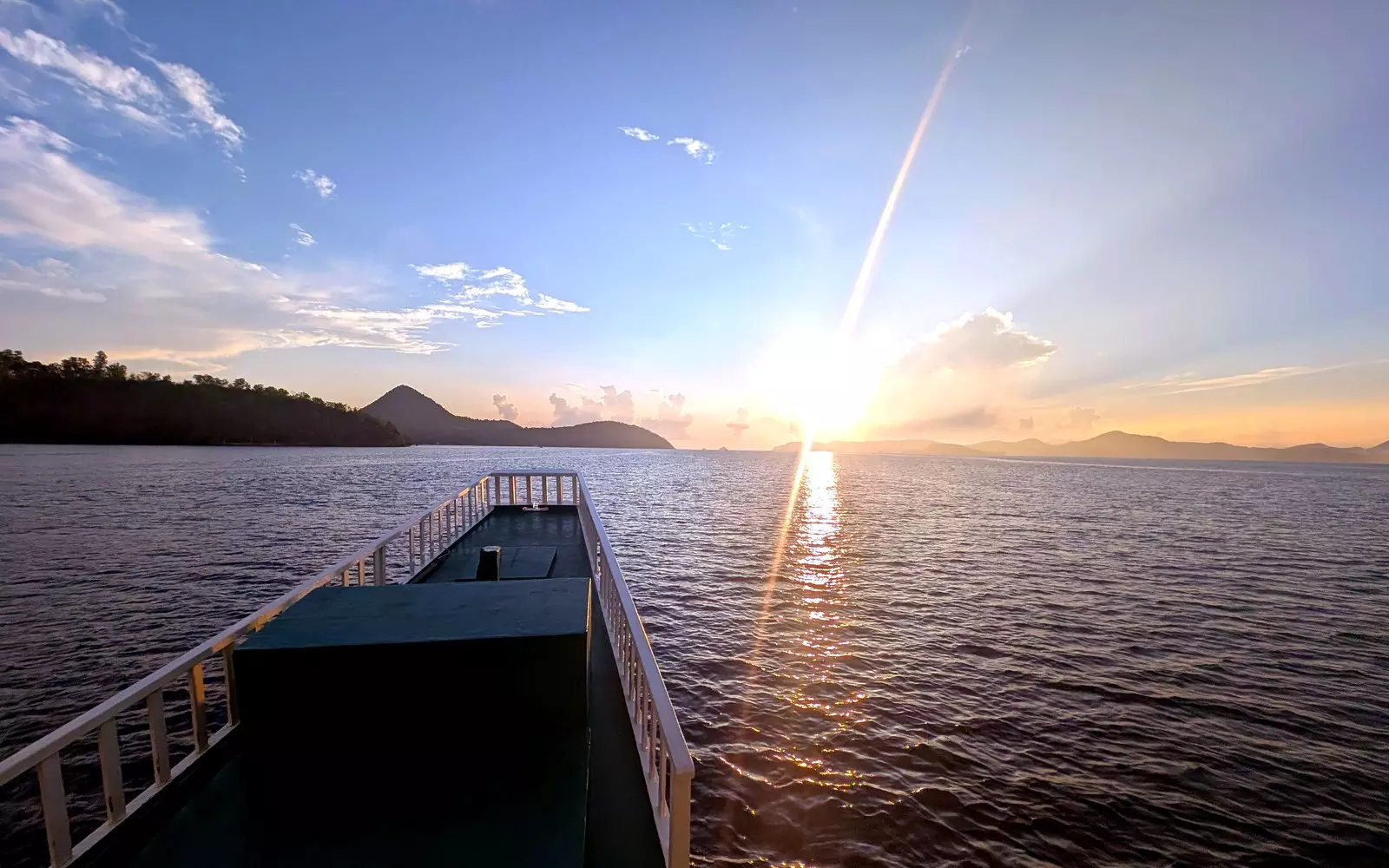
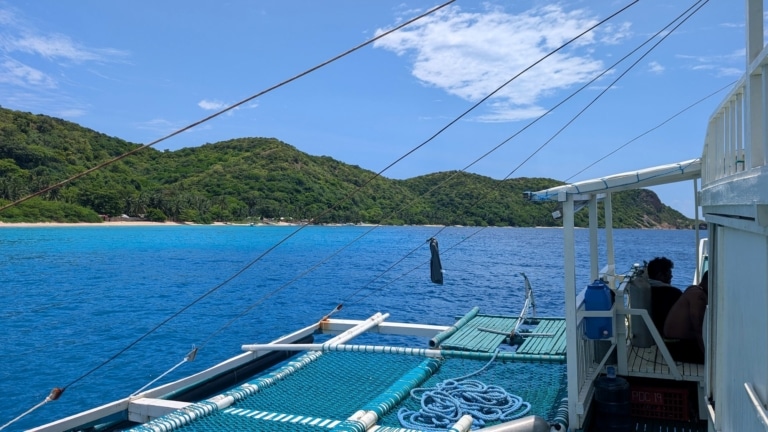
Departure is around seven o’clock, from the port or directly in front of certain hotels along the coast. Aboard a two-level bangka, recognizable by its bamboo outriggers, you follow Busuanga’s coastline for nearly two hours. Islands go by one after another, between quiet bays and beaches that are still deserted at this hour. Drinks and lunch are provided on board for this day at sea. The excursion is possible for much of the year, although the dry season—especially late spring—generally offers the most favorable conditions, with calm seas and better underwater visibility. As you near the areas frequented by dugongs, a Tagbanwa ranger comes aboard.
Before anyone enters the water, he introduces the animal and explains the rules that govern observation: keep your distance, never touch or chase it, enter the water quietly and in small groups. He also stresses the importance of staying to the side of the dugong, without placing yourself in its path when it comes up to breathe.
Farther on, members of the community already on the water steer the boat toward the spots where the animals feed. The bangka slows down and eyes turn to the surface. A gray back appears, a breath can be heard, then nothing. The ranger, used to spotting these discreet signs, has often seen the animal before the visitors. This first glimpse—sometimes a long wait— is enough to change the atmosphere on board.
A suspended encounter above the seagrass beds
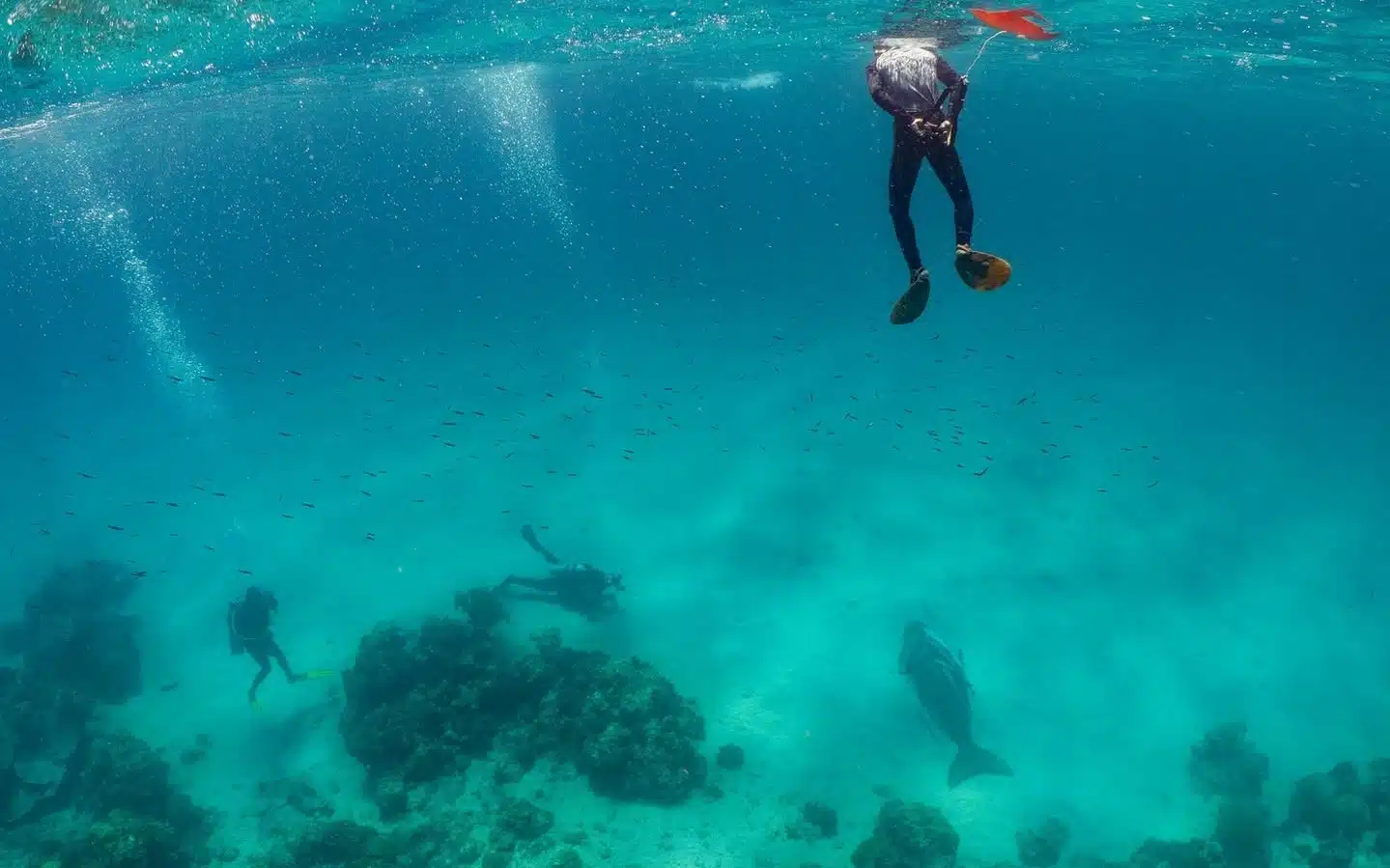
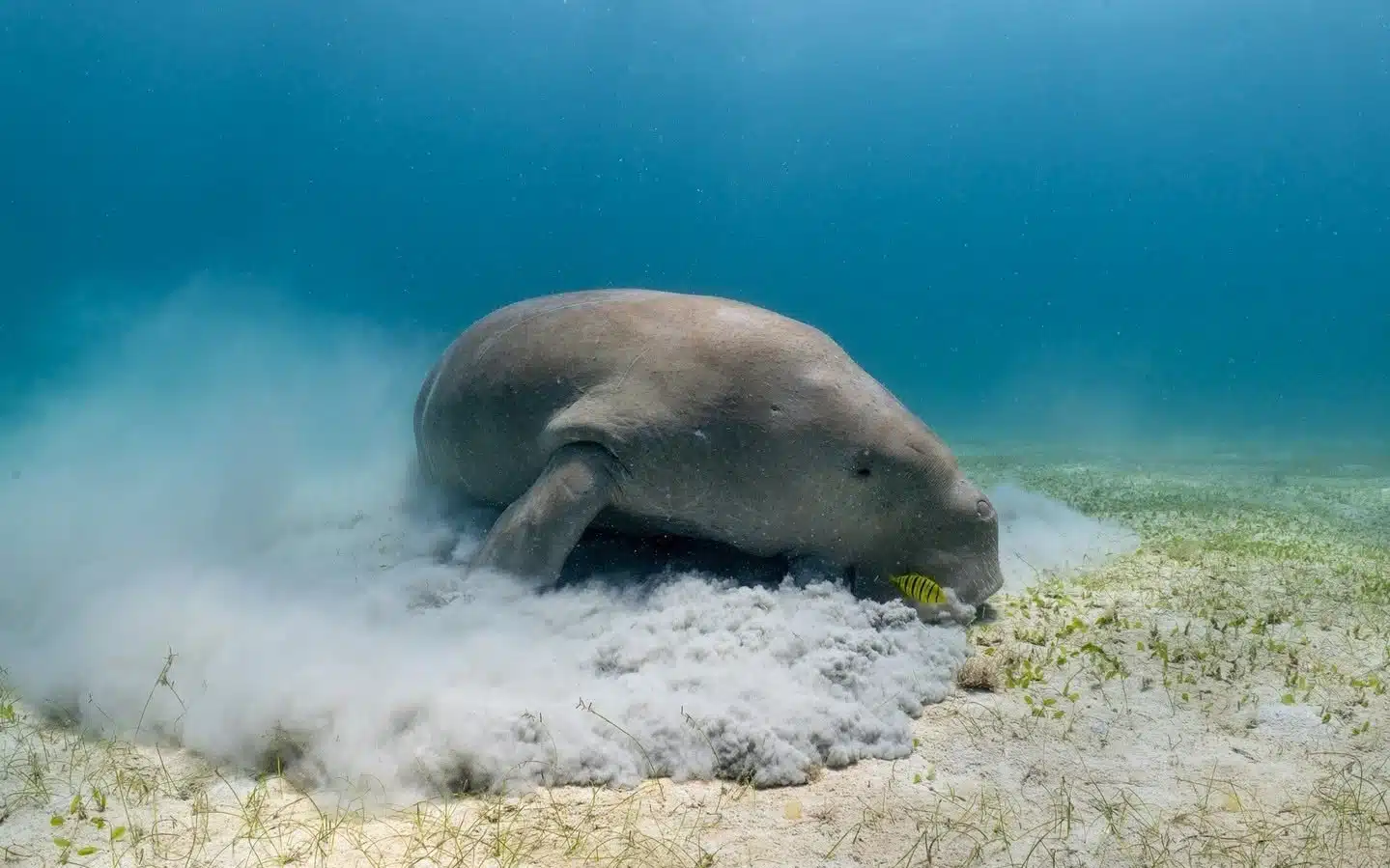
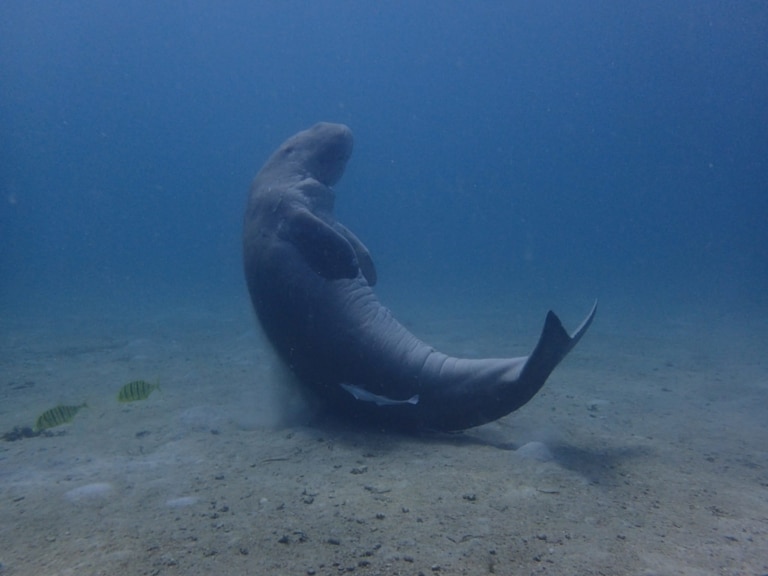
When conditions allow, a first small group gets into the water, accompanied by the ranger and a guide. Beneath the surface, seagrass covers the sandy bottom. Then the dugong appears, sometimes a few meters down, busy feeding. Its broad snout gently roots through the seagrass, lifting light clouds of sand.
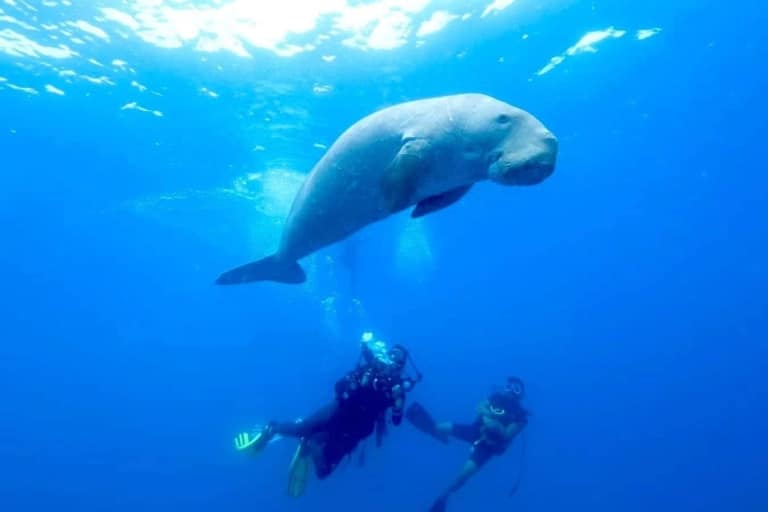
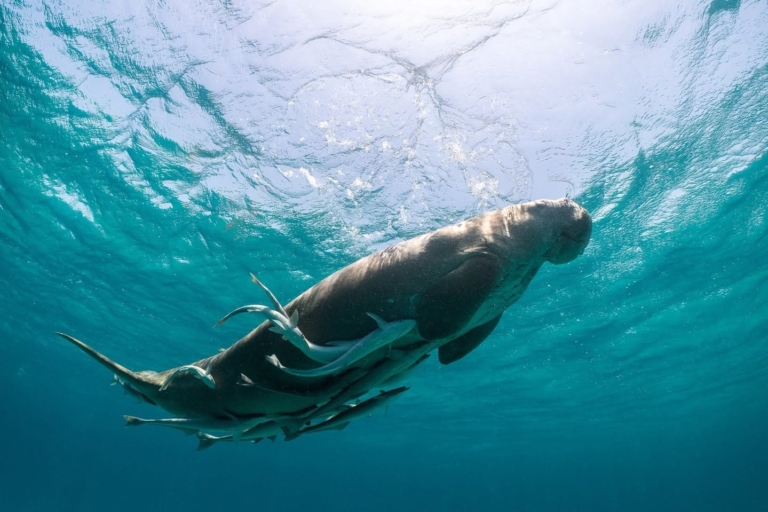
From the surface, you can make out its massive silhouette, its slow movements, and its regular returns to the surface to breathe. The observation takes place quietly, staying to the side of the animal, without trying to close the distance. You mostly hear your own breathing through the snorkel, while the dugong carries on, indifferent to the onlookers. For about fifteen minutes, everyone enjoys the moment, before returning to the boat to make room for the next group. Divers can experience the same encounter on scuba, close to the seagrass beds, while following the same guidelines.
This way of approaching the dugong gives the experience its unique character: nothing is staged, no behavior is provoked. The animal remains free to continue on its way or to move off. Back on deck, conversation slowly resumes, while the observation continues for the other participants. What often stands out, beyond the dugong’s presence, is the simplicity of the encounter and the time taken to watch a wild animal moving through its natural environment.
A territory preserved by those who know it
This experience also owes a great deal to the commitment of the Tagbanwa, the Indigenous people of Palawan, whose ancestral domain includes these waters. The community oversees dugong watching, limits the daily number of visitors, and trains its own rangers with the support of a marine wildlife protection organization. Entrance fees are paid directly to them. Their role goes far beyond accompanying travelers: the rangers help monitor against illegal fishing and poaching, as well as tracking dugongs and protecting their feeding grounds. In particular, they have helped identify the areas frequented by the animals and to record them using drones.
Some dugongs, observed regularly, are even known by name within the community. In a region where their presence remains precious, this knowledge of the area and day-to-day vigilance give the encounter particular depth. After the observation, the day continues on nearby reefs, where snorkeling and diving make it possible to discover corals and, often, to come across sea turtles. Lunch is shared on board before setting off again toward the coast in the afternoon.
This excursion naturally fits into a stay in Coron, for travelers who are sensitive to marine life and to experiences that favor time and observation. What stays with you is the dugong’s silhouette above the seagrass beds, but also the ranger’s patience and this way of discovering the sea while respecting those who live there and those who care for it.


 Français
 English


