



- Observe the fervour of the Sri Lankans.
- Discover one of Sri Lanka’s “classics” in an atypical way.
- Take a trip back in time thanks to your passionate and captivating guide.
- Learn while giving your calves a workout!
- Enjoy a well-deserved break to drink a king coconut.
Anuradhapura by bike, between royal ruins and living spirituality
Exploring Anuradhapura by bicycle offers a smooth, accessible and immersive way to discover one of the most iconic sites in Sri Lanka’s Cultural Triangle. Accompanied by an expert guide, you ride through an ancient royal capital whose ruins spread across a vast area, revealing along the way several layers of history and religious practices that are still very much alive. Cycling makes it possible to experience distances differently here, linking the various complexes in one continuous flow. This experience is offered by our local travel agency, a specialist in authentic discoveries across the island.
Founded several centuries before our era, then abandoned before gradually being reclaimed by the jungle, Anuradhapura was rediscovered in the 19th century. Now listed as a UNESCO World Heritage Site, it preserves many remains, monumental dagobas and places of worship that are still visited today. This cycling exploration lets you grasp its different dimensions, combining archaeological heritage and living spirituality, in a setting where contemporary practices are part of the continuity of history. A must-see discovery during a trip to Sri Lanka.
The sacred tree and the spiritual dimension
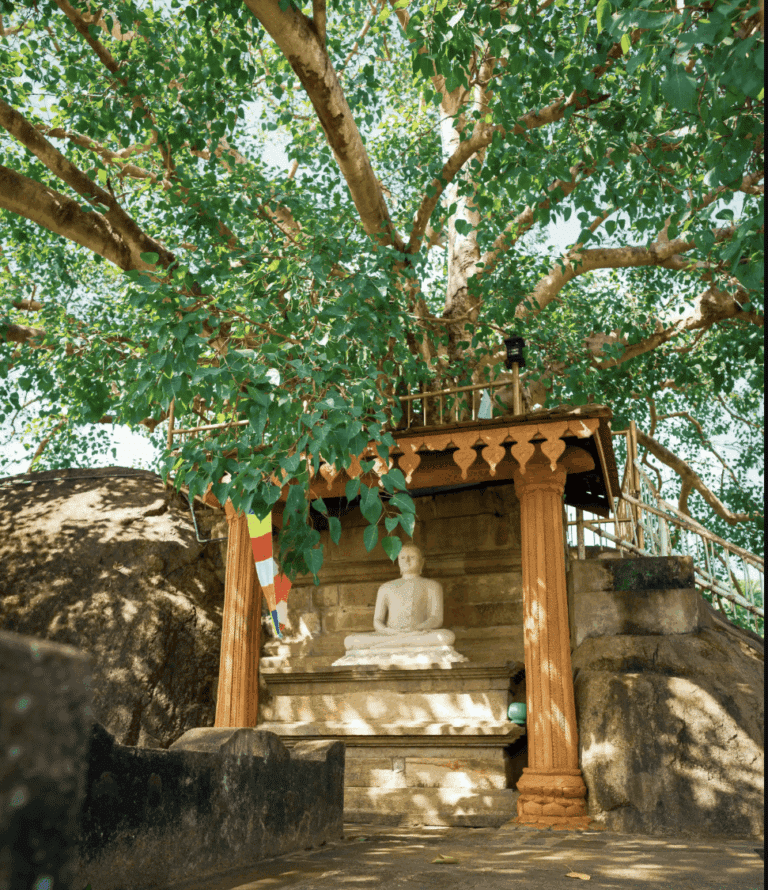
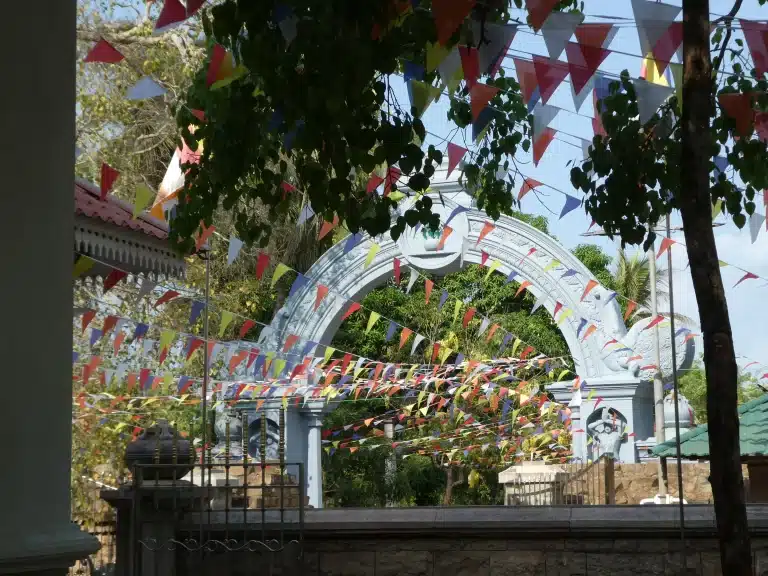
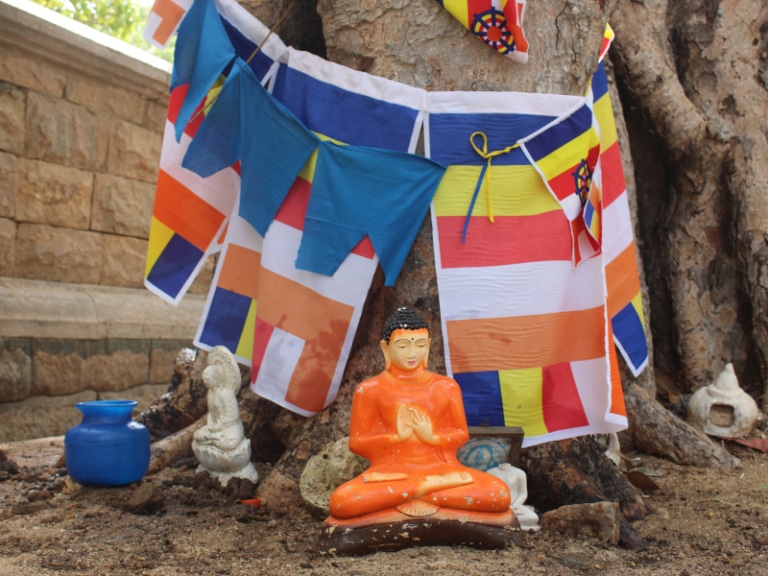
The discovery begins with the temple and the Sri Maha Bodhi, a sacred tree considered one of the oldest in Asia. Venerated for over 2,000 years, it is associated with the tree under which Buddha is said to have attained enlightenment. Today it is a central place of pilgrimage, deeply rooted in the country’s religious life and in the daily practices of worshippers.
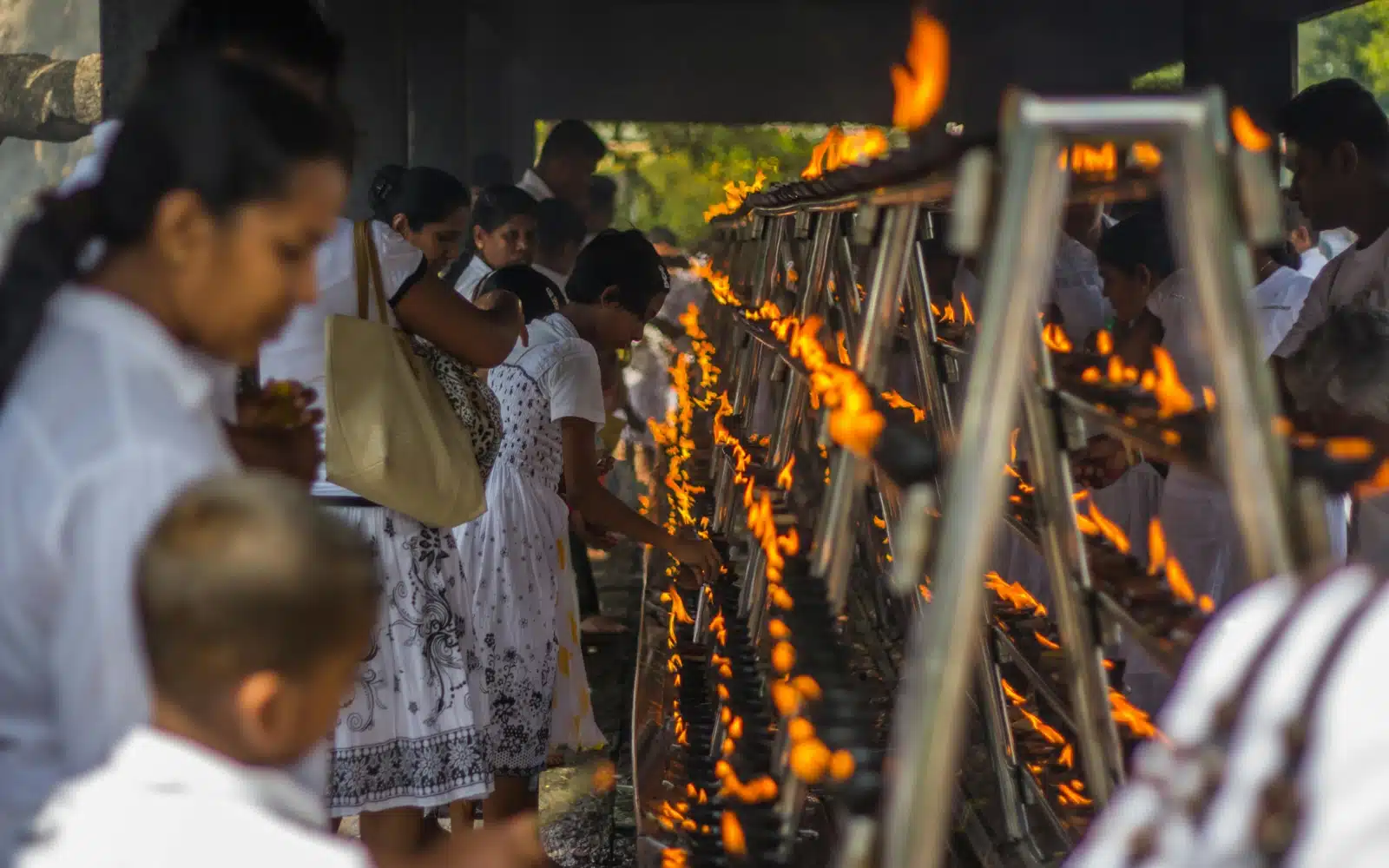
On site, the atmosphere stands out for the constant presence of pilgrims dressed in white, who come to pay their respects in a setting imbued with calm and reverence. Gestures are simple, movements measured, and the whole site reflects a kind of silent focus. Here, Anuradhapura appears as a living place, where spirituality is not only a matter of heritage, but is expressed through the very use of the spaces.
By bicycle, this first stage takes on a particular dimension. It allows you to gradually draw closer to the different areas, observe the rhythms of attendance, and absorb the site’s overall atmosphere. This introduction sets a calm pace that naturally prepares you for what follows, while establishing the essential landmarks of the site.
Ruins, dagoba and great expanses of water
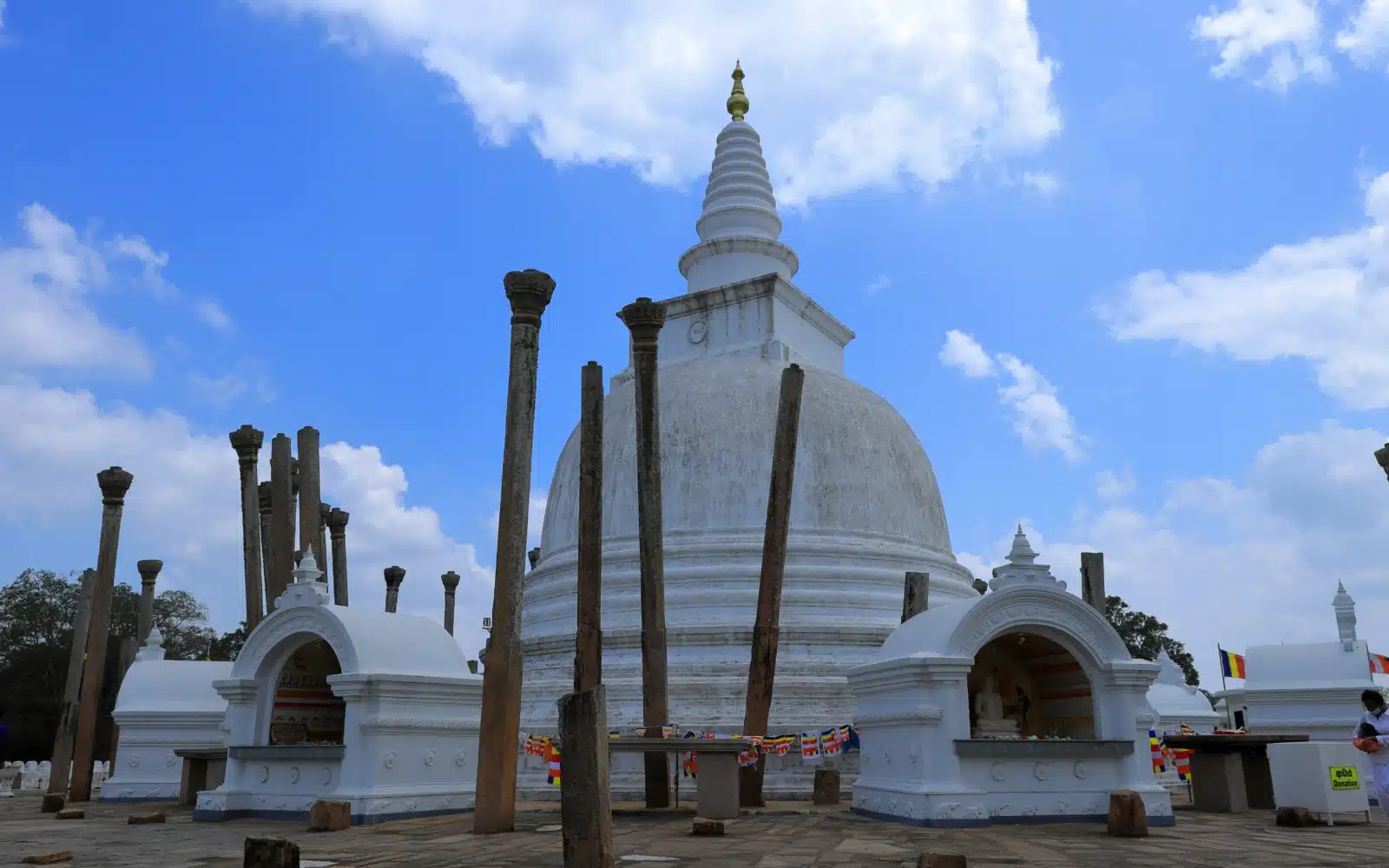
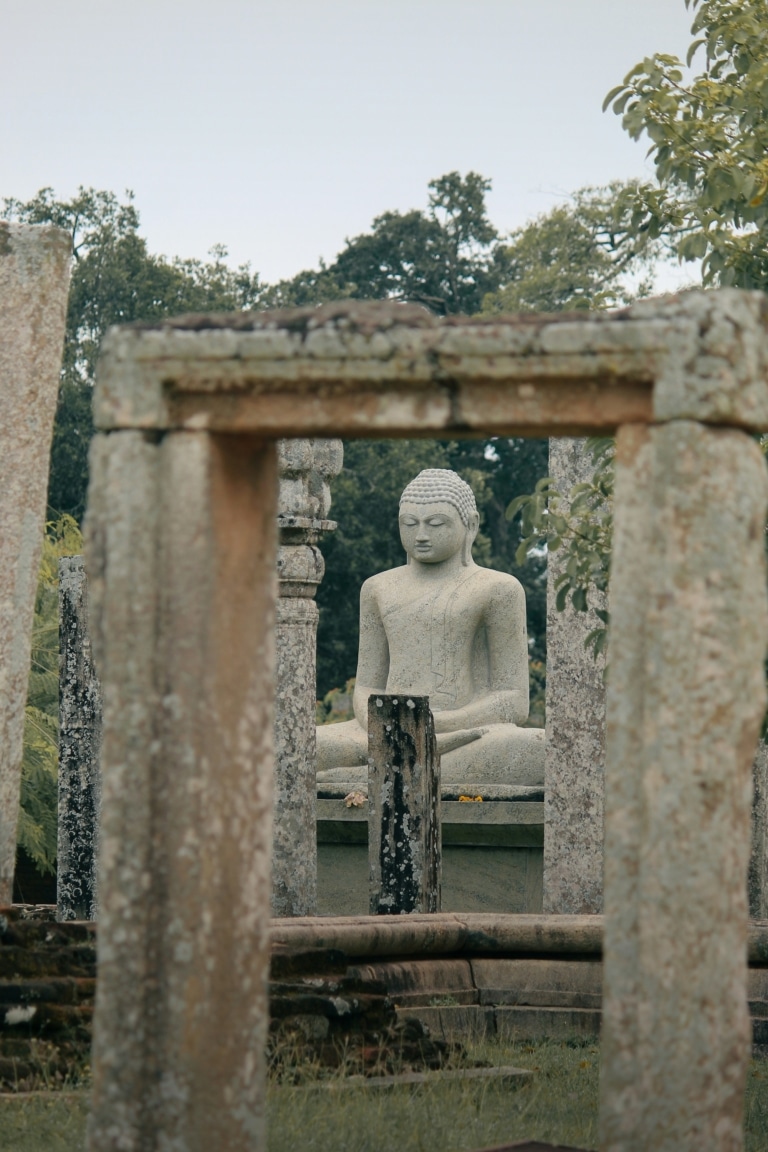
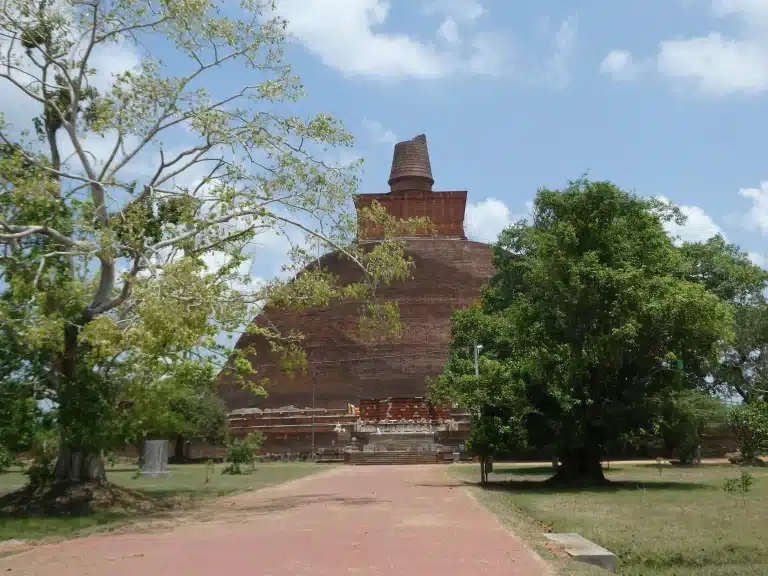
The route continues into the heart of Anuradhapura, where imposing dagoba and ancient remains spread across a vast area. These often massive brick structures rise from the landscape and bear witness to the city’s former importance, once a major political and religious center of the island. Their presence leaves a lasting impression and shapes the way space is perceived.
The itinerary proposed by your guide favors smooth movement between the different complexes, following routes that make it possible to approach the site’s various zones gradually. Cycling makes the transitions easier and gives overall coherence to elements that are sometimes far from one another. At certain moments, the surroundings reveal quieter areas, reinforcing the sense of an almost intimate discovery of the site.
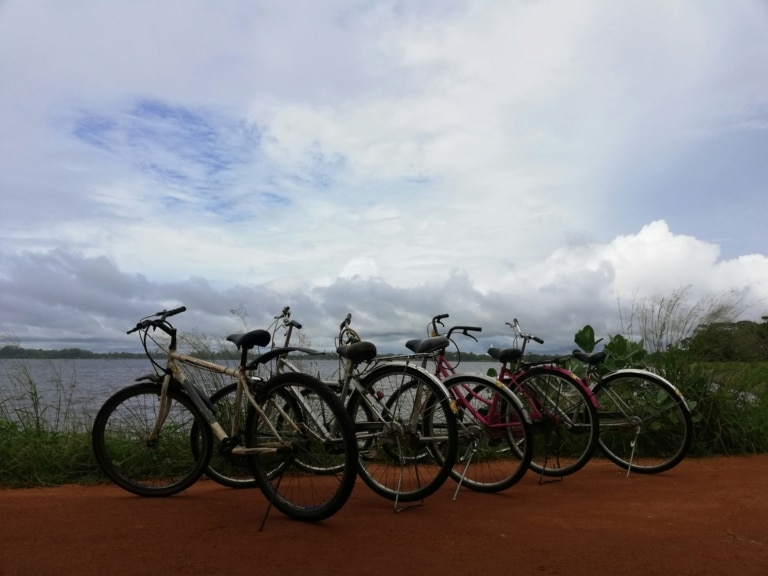
A break is planned around a thambili, the drinkable coconut, appreciated for its freshness. This pause along the way then makes it possible to head back out towards the reservoirs that surround the city. These stretches of water hold an essential place in Anuradhapura’s history and highlight the importance of water management in its development. They fully contribute to the reading of the landscape, linking the site’s natural and built dimensions. The return to the starting point then unfolds gently, at the end of a structured, gradual itinerary.
Exploring at your own pace, between freedom and continuity
As the route unfolds, the bicycle proves to be a particularly well-suited way to explore the site at its scale. It allows you to link the different stages without constraints, while still offering the option to adjust the pace depending on what you observe, the stops you make, or moments of contemplation. This freedom of movement contributes to a more flexible experience, in keeping with the diversity of the spaces you pass through.
This approach also encourages closer attention to detail. Between two monumental complexes, your gaze lingers on the volumes of the dagoba, the open vistas over the ruins, or the scenes of daily life that punctuate the visit. The experience then becomes more personal, each person shaping their own reading of the site from the elements encountered along the way.
The guide’s support helps structure the entire route. Through explanations and the design of the itinerary, they ensure consistency between the different stages and provide essential keys to understanding. The visit thus takes the form of a harmonious whole, where the historical, cultural, and spiritual dimensions come together naturally to the rhythm of cycling.





 Français
 English