





- The exceptional clarity of the lagoon.
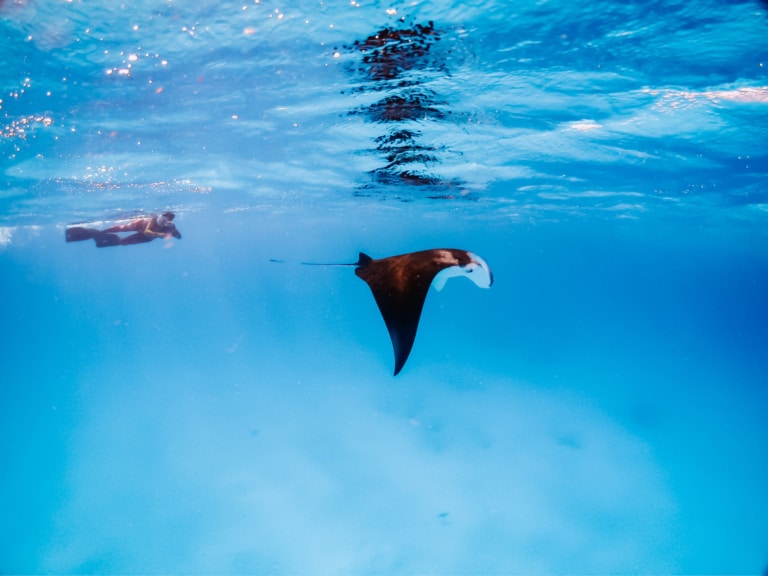
- Observe marine life up close.
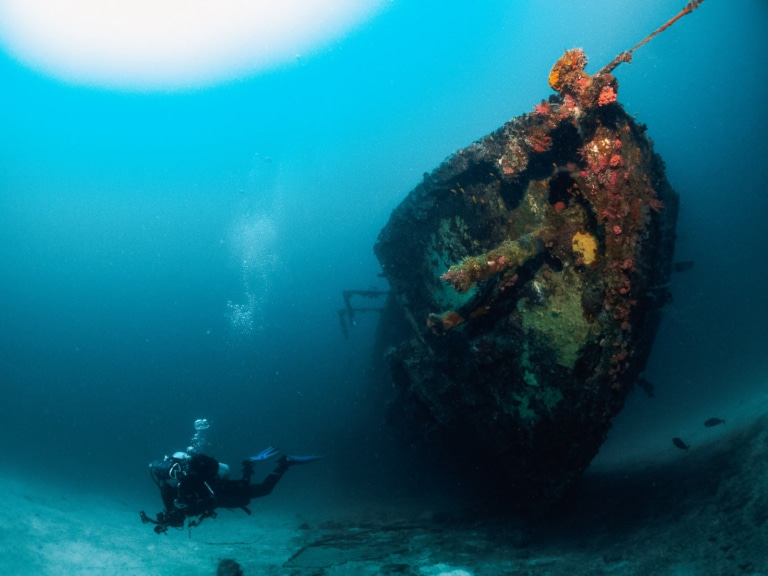
- Explore the seabed at your own pace.
- The calm and silence beneath the surface.
- That unique feeling of being between two worlds.
A dive into a world suspended in time
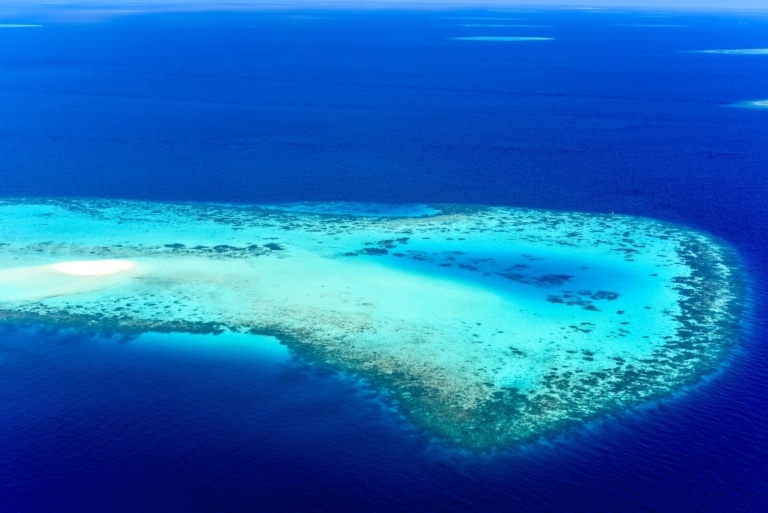
In the Maldives, the landscape never really stops at the horizon line. It naturally extends beneath the surface, like a silent continuity between the visible and the invisible. Snorkeling fits into this obviousness: that of immediate access to another way of reading the lagoon—without effort, without filters, without staging—imagined by our responsible travel agency.
It’s a simple experience in principle, but surprisingly rich in sensations. Just a few moments are enough to move from a familiar world to an environment entirely ruled by light, movement, and silence. An immersion that relies on no performance, but on an openness to the place and to what it reveals, during a trip to the Maldives.
In this in-between, everything becomes slower, gentler, almost suspended. Your gaze shifts pace, your body too. And what seemed to be just a gesture gradually becomes a way of inhabiting the seascape differently.
A natural passage into a different rhythm
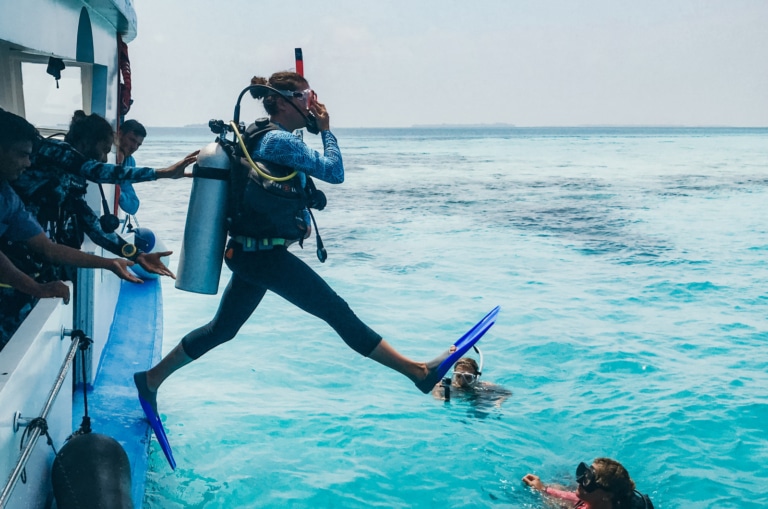
From the very first moments in the water, a shift takes place. Nothing abrupt, nothing spectacular, but a gradual transformation in the relationship to the body and to space. Breathing lengthens, movements become lighter, and the surface of the lagoon stops being mere scenery and becomes a threshold.
In the Maldives, this transition feels almost natural. The lagoon, calm and luminous, already invites this slide. You don’t really dive in: you let yourself slip into it, as if the water were a logical continuation of the land.
Little by little, familiar reference points fade. Distances lose their rigidity; outlines become softer, more fluid. The gaze leaves the surface and turns toward the underwater volumes, where light breaks apart and reinvents itself with every movement.
In this first phase, everything relies on a kind of gentle adaptation. The body learns to work with buoyancy, with the slowness imposed by the water, with a new way of being present. Nothing is forced; everything is discovered through successive adjustments.
A living landscape between light and silence
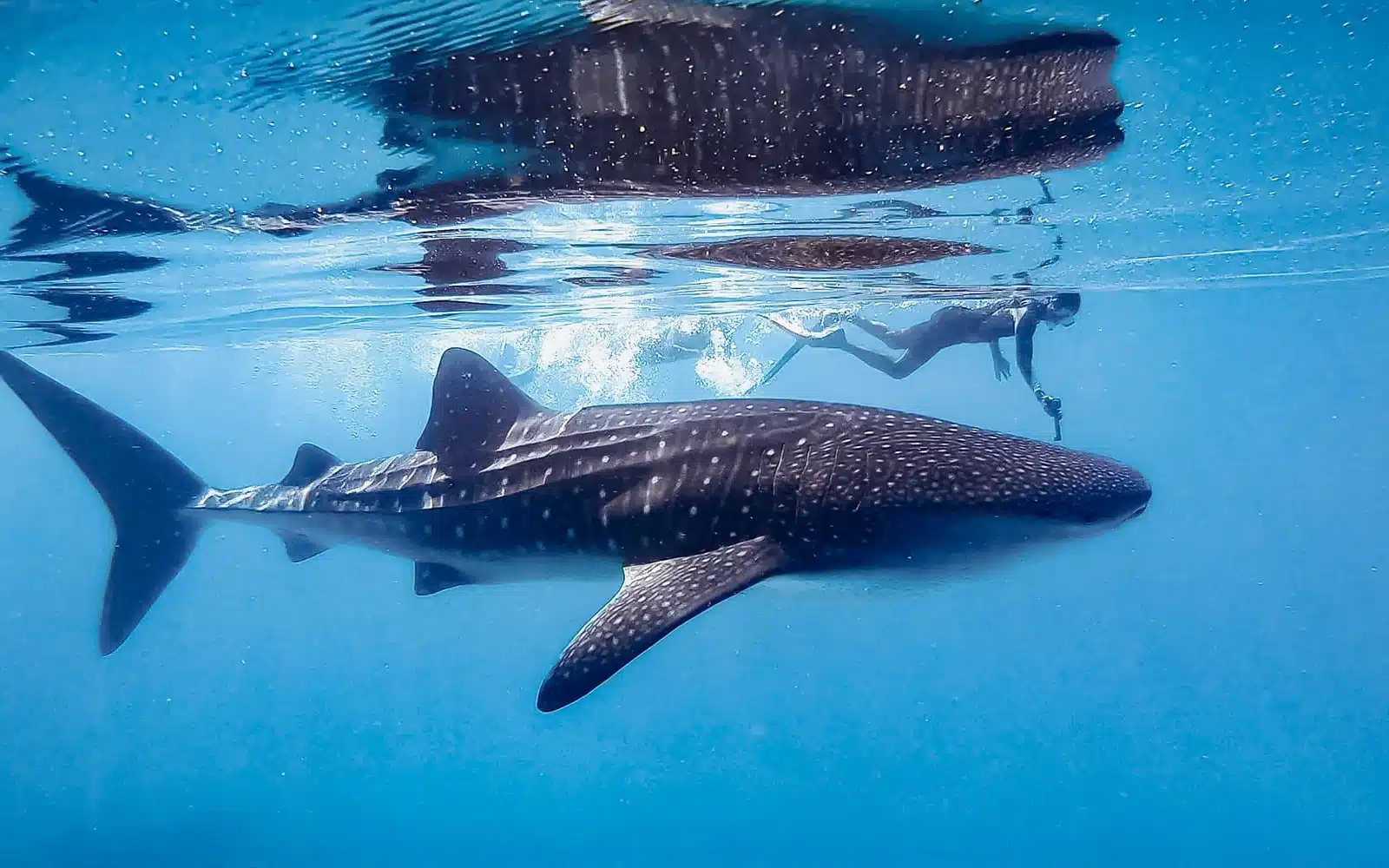
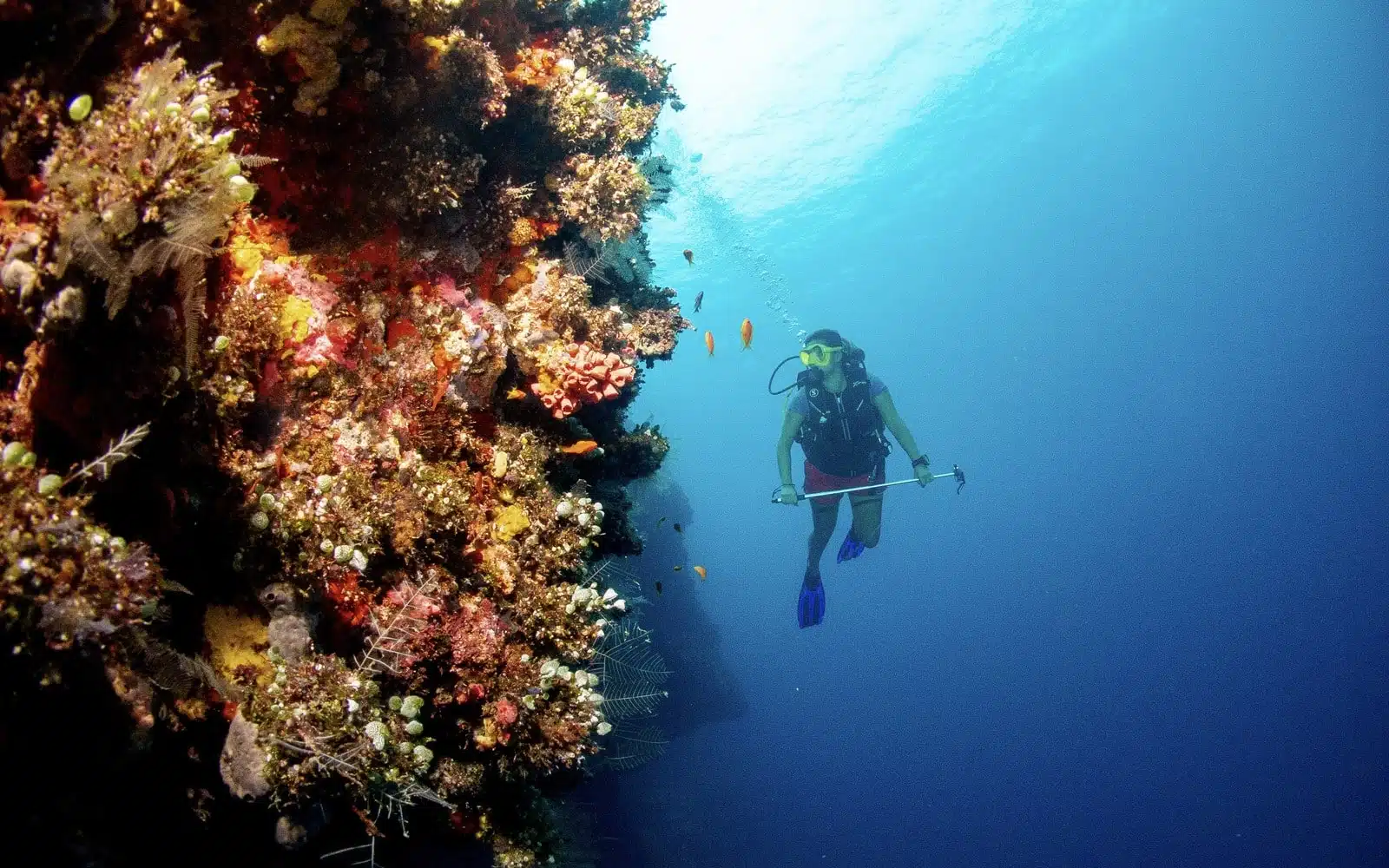
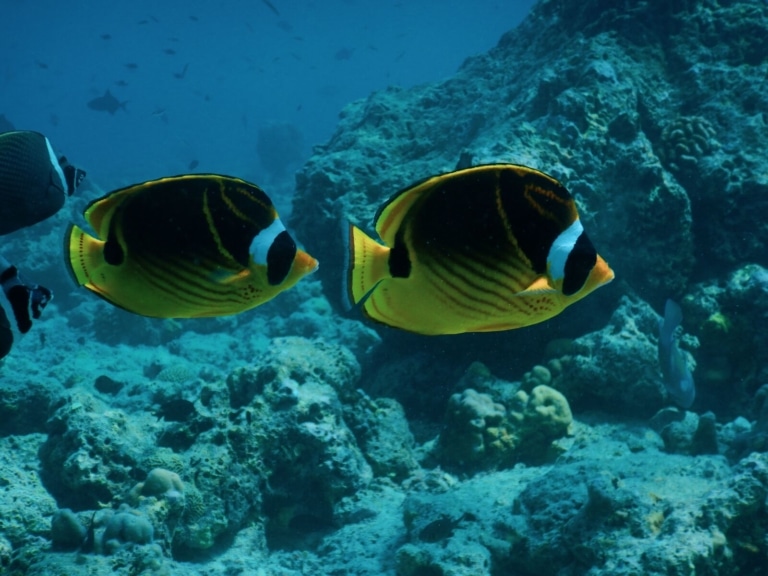
Beneath the surface, the scenery unfolds with particular delicacy. The reef appears in layers, between pale sand, coral reliefs, and deeper shadowed areas. Light, filtered by the water, creates constant variations that continually transform the perception of space.
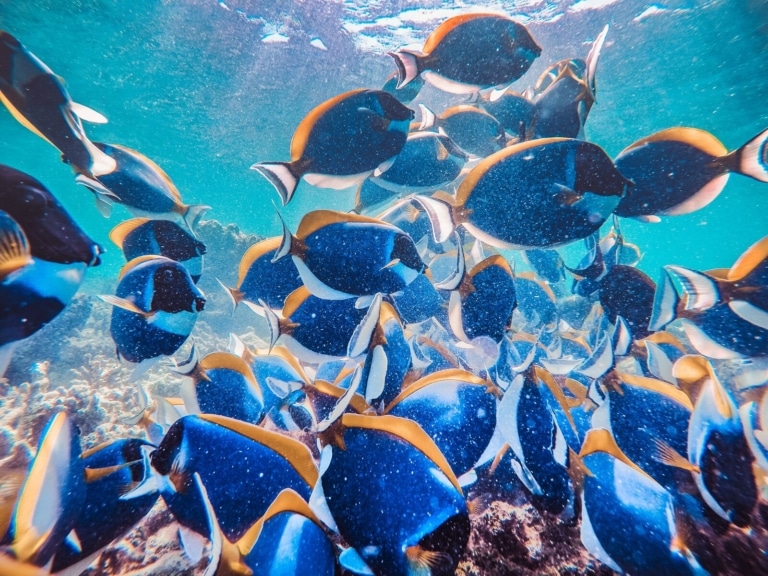
The eye can never settle for long. It is constantly drawn to a movement, a change, a fleeting detail. A shadow glides by, a school of fish crosses the light, a texture subtly shifts under the current’s effect. Nothing is fixed, yet everything remains readable in an almost natural coherence.
What stands out most is the quality of the light. It doesn’t merely illuminate: it sculpts, it shapes, it softens forms. At times, it makes the contours seem almost unreal, as if suspended between two states.
Silence, meanwhile, is never absolute. It is inhabited by subtle vibrations, invisible movements, a constant presence that is never intrusive. It is a dense silence, accompanying observation without ever breaking it.
In this environment, the experience becomes less an exploration than a slow reading of the landscape. Each moment reveals a variation, a nuance, a micro-evolution that enriches the overall perception of the place.
An experience of slowness and attention
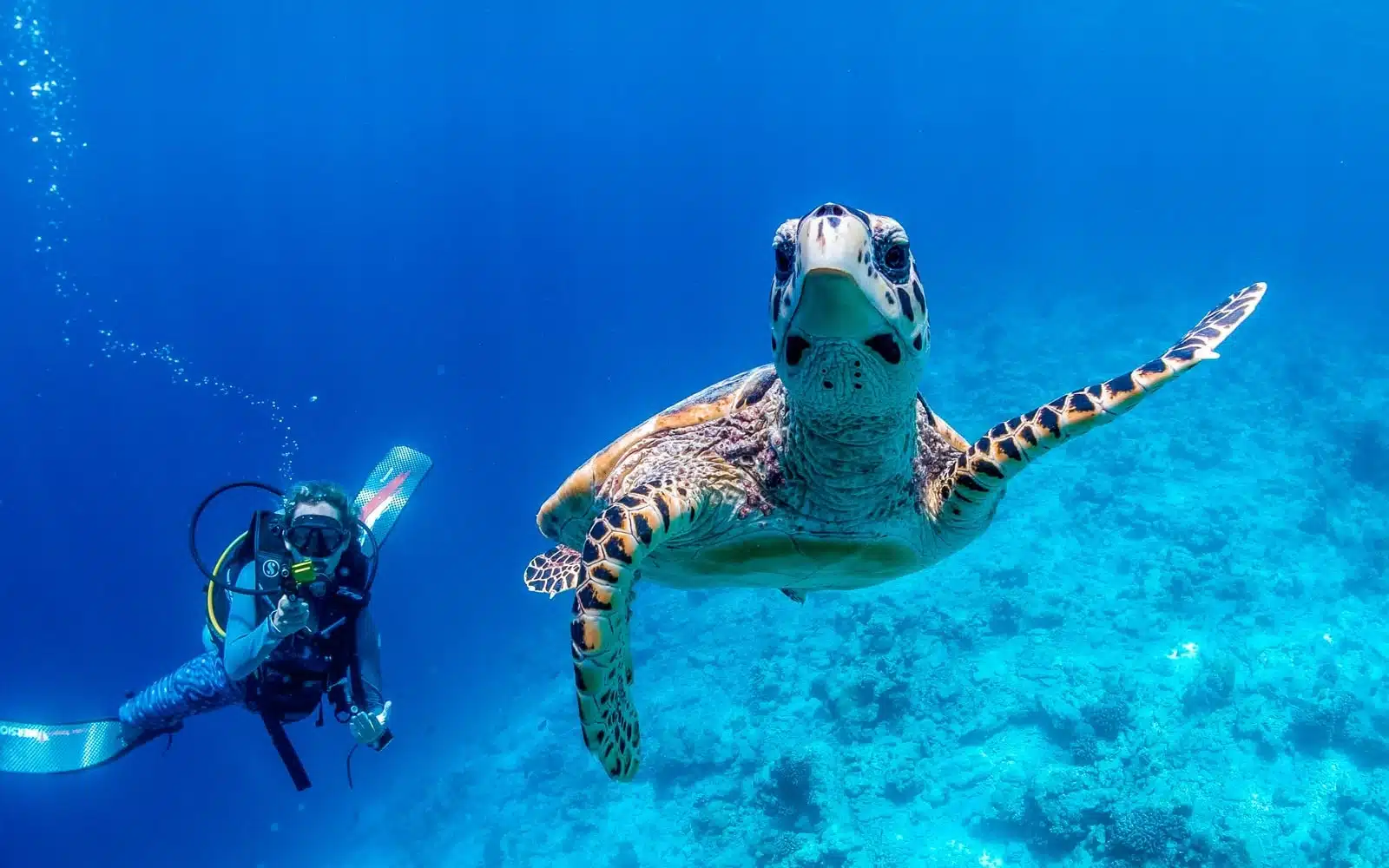
Over time, another form of presence settles in. Snorkeling stops being an action and becomes a state. There is no longer an objective, no precise direction—only an openness to whatever appears.
This absence of purpose profoundly changes the relationship to time. A few minutes can feel stretched, so dense are the sensations. Conversely, long stretches can pass without any real sense of their duration.
What remains is not isolated images, but a continuity of sensations: an impression of fluidity, a memory of calm, a different way of having moved through a natural space.
In this experience, attention becomes central. It doesn’t narrow; it shifts. It follows a movement, lets itself be distracted, returns to a detail, lingers elsewhere. It is this mobility of the gaze that makes up the essence of the experience.
And that is probably where the strength of this kind of immersion lies: in its ability to turn a simple action into a lasting form of openness. A silent interlude, leaving its mark long after you return to the surface.




 Français
 English